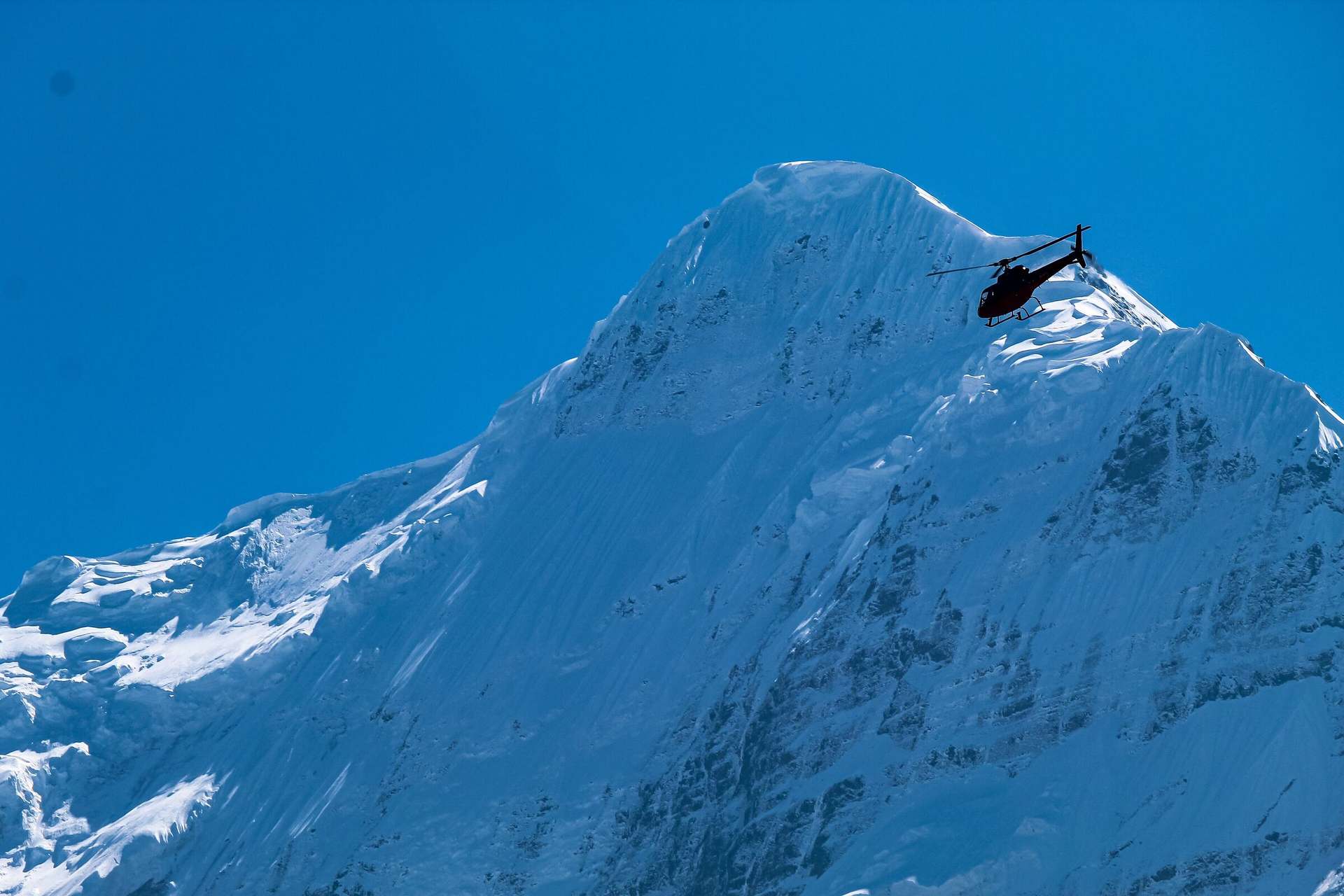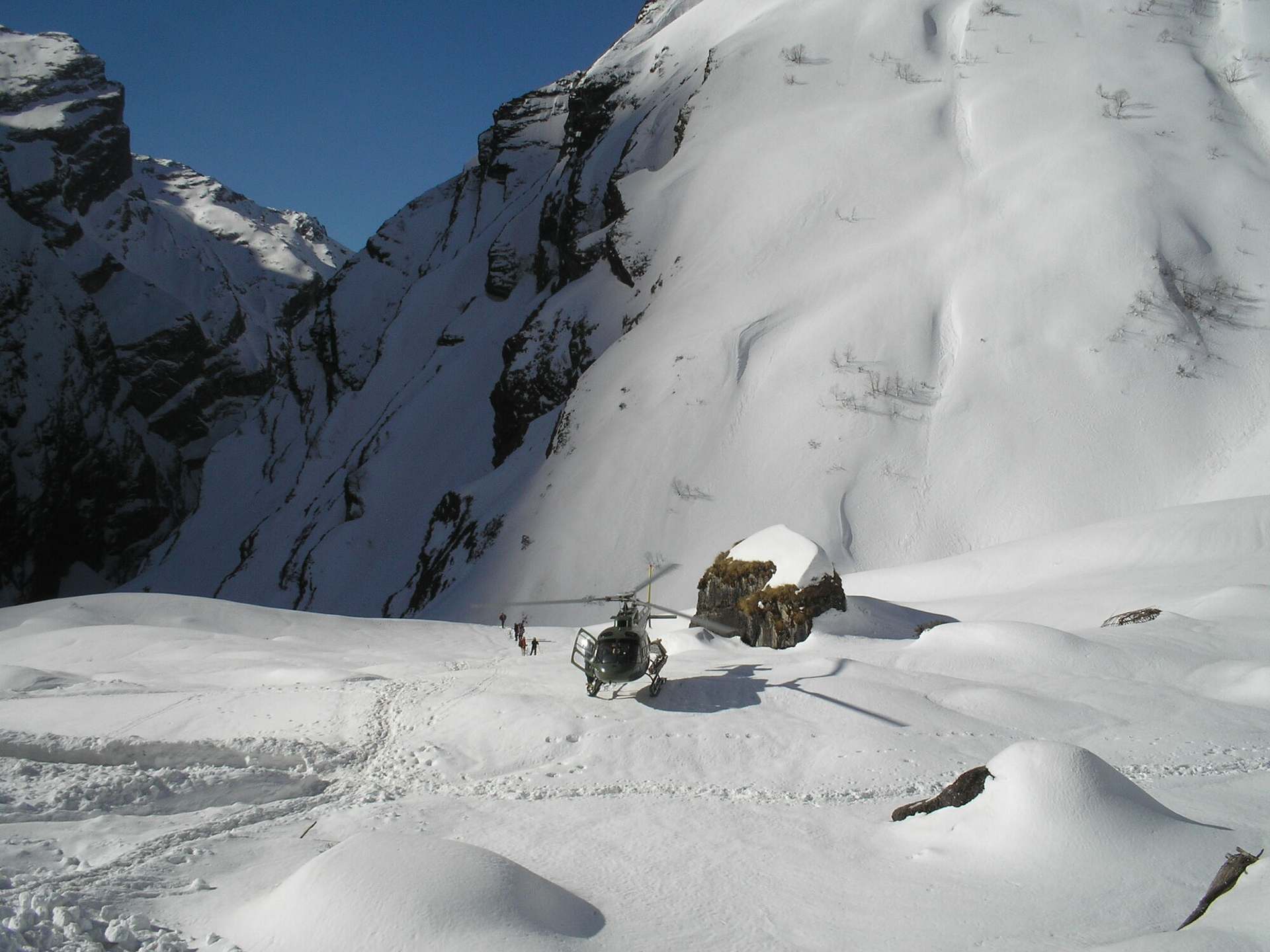
© Roman Raghu Shrestha / Wikimedia Commons · CC BY-SA 4.0Pathibhara Temple Helicopter
Biratnagar to the Pathibhara Devi temple in eastern Nepal, replacing a long drive and a four-hour climb.
Per person
US$425Whole aircraft
US$1,600Any two landing sites in Nepal
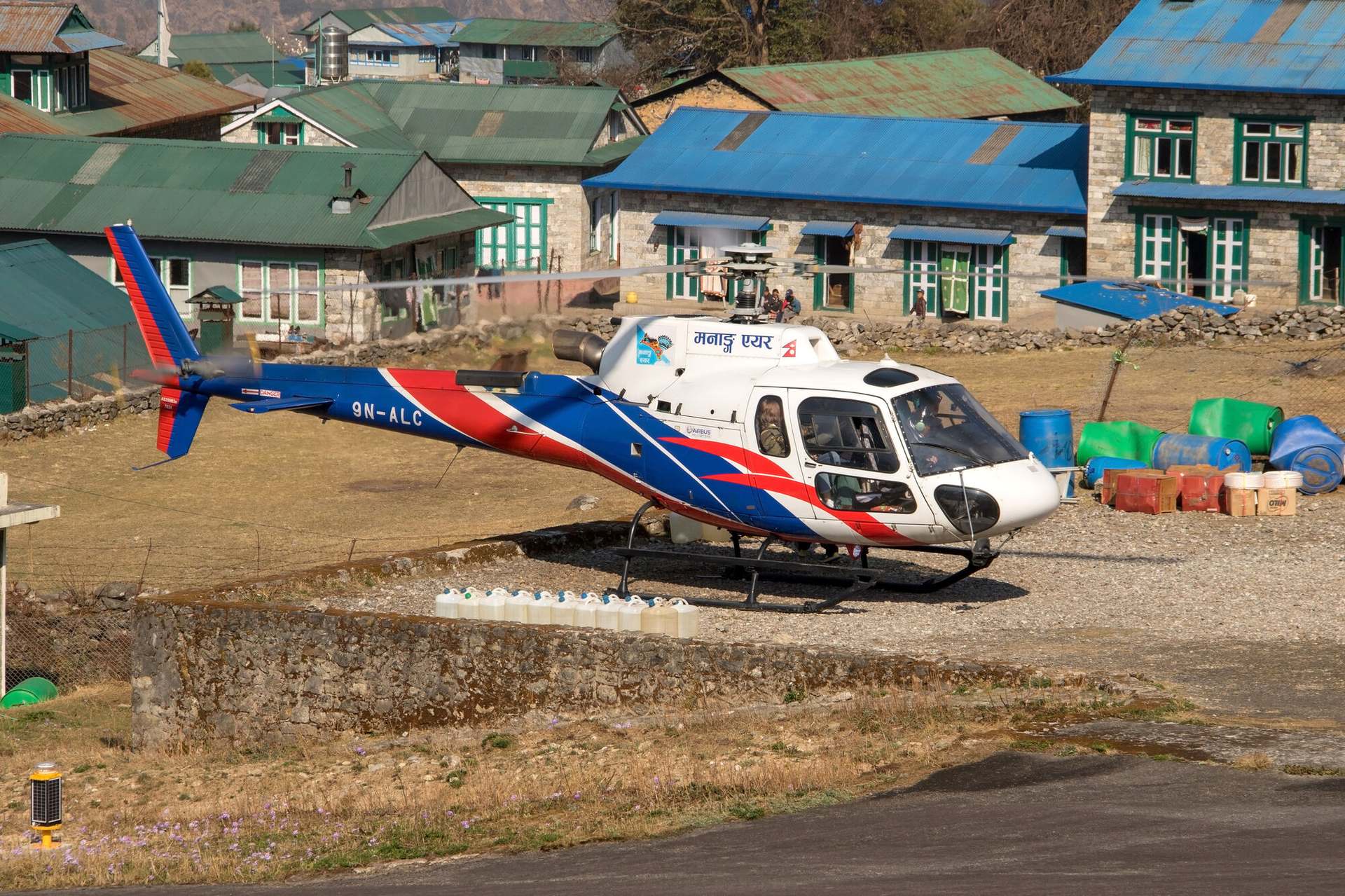
Whole aircraft, your timing
Every licensed operator that can fly this trip will price your dates. You pay nothing until you accept one.
The whole helicopter, between any two places in Nepal, on your own timetable.
This leg is sold as a package with a fixed price from every operator flying it — usually cheaper than chartering it, and bookable without waiting for quotes.
© Roman Raghu Shrestha / Wikimedia Commons · CC BY-SA 4.0Biratnagar to the Pathibhara Devi temple in eastern Nepal, replacing a long drive and a four-hour climb.
Per person
US$425Whole aircraft
US$1,600Before anybody quotes you
Above about 12,000 ft the seat count stops being the answer. Enter your party’s real weights and the landing site, and see which aircraft can take them.
Wondering how long the leg itself is? The flight-time calculator gives the distance between any two landing sites in Nepal and the time in the air — which, on a charter priced by the hour, is most of the quote.
Not sure which to pick?
Both end with a licensed operator flying you. The difference is who sets the price.
A flight we already publish — Everest Base Camp, Muktinath, Annapurna. The price is fixed and visible before you commit, seats can be shared with other travellers, and you pick the operator yourself from a priced comparison.
Browse packagesAnywhere to anywhere: transfers, expedition support, cargo, a landing site with no published product. You describe the leg once and every operator able to fly it comes back with its own price for the whole aircraft.
Price a legWhat a charter costs
Whole-aircraft charter in Nepal is billed by the hour of block time. A five-seat Airbus AS350 or H125 sits in that band; twin-engine machines cost more. Two operators quoting the same hourly rate routinely quote different totals for the same leg, and these are the reasons.
Lower end, single engine
Upper end, single engine
Block, for a 55-min sector
Margin we add
These are the ranges operators on this marketplace have been quoting. Go Heli Nepal does not set charter rates and does not add a margin to them — the figure you accept is the operator’s own, and their name is on your invoice.
Where the money goes
Operators publish an hourly figure. What you actually pay is decided by three things underneath it, and two of them are yours to influence.
Block time includes taxi, run-up, shutdown and any period the aircraft waits with rotors turning. A 55-minute sector is normally quoted as about 1.2 hours of block.

If the helicopter is based in Kathmandu and your trip starts in Pokhara, somebody pays for it to fly to Pokhara empty and home again. Positioning is the largest single reason an identical leg costs different amounts from different operators.

A helicopter that drops you and returns empty is billed for both legs regardless. If you are coming back the same day the aircraft is already paid for, and waiting on the ground costs far less than a second positioning pair.

Questions
The six things people ask before naming a leg.
Something else? Ask the flight desk — staffed 24 hours.
Whole-aircraft charter in Nepal is billed by the hour of block time and typically runs USD 1,800 to USD 2,600 an hour for a five-seat Airbus AS350 or H125, rising for twin-engine aircraft. In practice that means a short transfer such as Lukla to Kathmandu starts around USD 2,600 and a full Everest morning around USD 3,800. Two things move the number more than anything else: positioning, which is the empty flying needed to bring the aircraft to you, and the operator's daily minimum. Sending one request to every certified operator is how you find out which of them already has an aircraft near your departure point.
A tour package is a flight the operator already publishes at a fixed price, with a fixed profile and the option to buy a single seat. A charter is you naming a leg — any two landing sites in Nepal — and operators pricing the whole aircraft for it. Packages are cheaper for the routes they cover because the operator is filling a flight it wants to run anyway. Charter is the only option for a sector nobody publishes, for a departure time you choose, or for work that is not sightseeing.
Almost, and the limits are practical rather than legal. A helicopter needs a level, firm site clear of obstacles and, at altitude, enough performance margin to lift off again — which is why high landings are made at established pads rather than wherever the view is best. Private land needs the owner's consent. Restricted areas such as Upper Mustang and the northern border districts need a permit issued per aircraft, and those take several days. Give the operator a coordinate or a place name and they will tell you whether it is workable before they price it.
A day is usually enough outside the two peak seasons, and same-day is normal for transfers and rescue. In October, November, March and April, aircraft are committed early and a fixed date wants two weeks or more. Restricted-area permits are the real constraint rather than aircraft availability: allow three to five working days for Upper Mustang or Dolpo. A request costs nothing and closes in four hours, so there is no penalty for asking early.
Almost always, and often by close to half. A helicopter that drops you and returns empty is billed for both legs regardless, so if you are coming back the same day the aircraft is already paid for — waiting on the ground costs far less than a second positioning pair. If you are staying overnight the saving mostly disappears, because the operator either brings the aircraft home or pays for the crew to stay with it. Say which you intend when you request, because it changes the quote more than the sector length does.
The operator, and their insurance. The aircraft, the crew, the Air Operator Certificate and the passenger liability cover all belong to the operator you accept a quote from, and their name is on your booking and your invoice. Go Heli Nepal is a marketplace: we verify that the certificate and the insurance are current before an operator can take work here, and we remove them the day either lapses. We do not own aircraft and we do not employ pilots.
Leave a number instead. A dispatcher works out the legs, the aircraft and the positioning with you on the phone — which is faster than any form when the plan is still moving.