What is the difference between a shared seat and a private helicopter charter?
+
A shared seat puts you on a departure other travellers are filling, so it is far cheaper but leaves when the seats sell and follows a fixed itinerary. A private charter is the whole aircraft — typically five seats — on your own timetable, with the freedom to add a landing or extend time on the ground. On the Everest tour a whole aircraft costs roughly seven to eight times one seat, so the crossover is between four and five passengers.
How much does a helicopter cost per hour in Nepal?
+
Private helicopter charter in Nepal typically runs US$1,800 to US$2,600 per hour of block time for a five-seat AS350 or H125. Block time is charged from rotor start to rotor stop, not just the airborne portion, and positioning the aircraft to where your flight begins is billed as well when it is not already there.
Which helicopter service is cheapest?
+
An empty leg is the cheapest way to fly by helicopter in Nepal, typically 40 to 70 per cent below the charter price, because the aircraft is already repositioning after a drop-off and the flight is happening either way. The trade is that you take the date and direction the aircraft is going rather than choosing them.
Do you need to book a helicopter rescue in advance?
+
No. Helicopter medical evacuation in Nepal is dispatched by phone at the moment it is needed, on the rescue line +977 98 6104 4994, with no account and no prior booking. What is worth arranging in advance is insurance that actually covers helicopter evacuation at the altitude you will be trekking at.
Can a helicopter fly anywhere in Nepal?
+
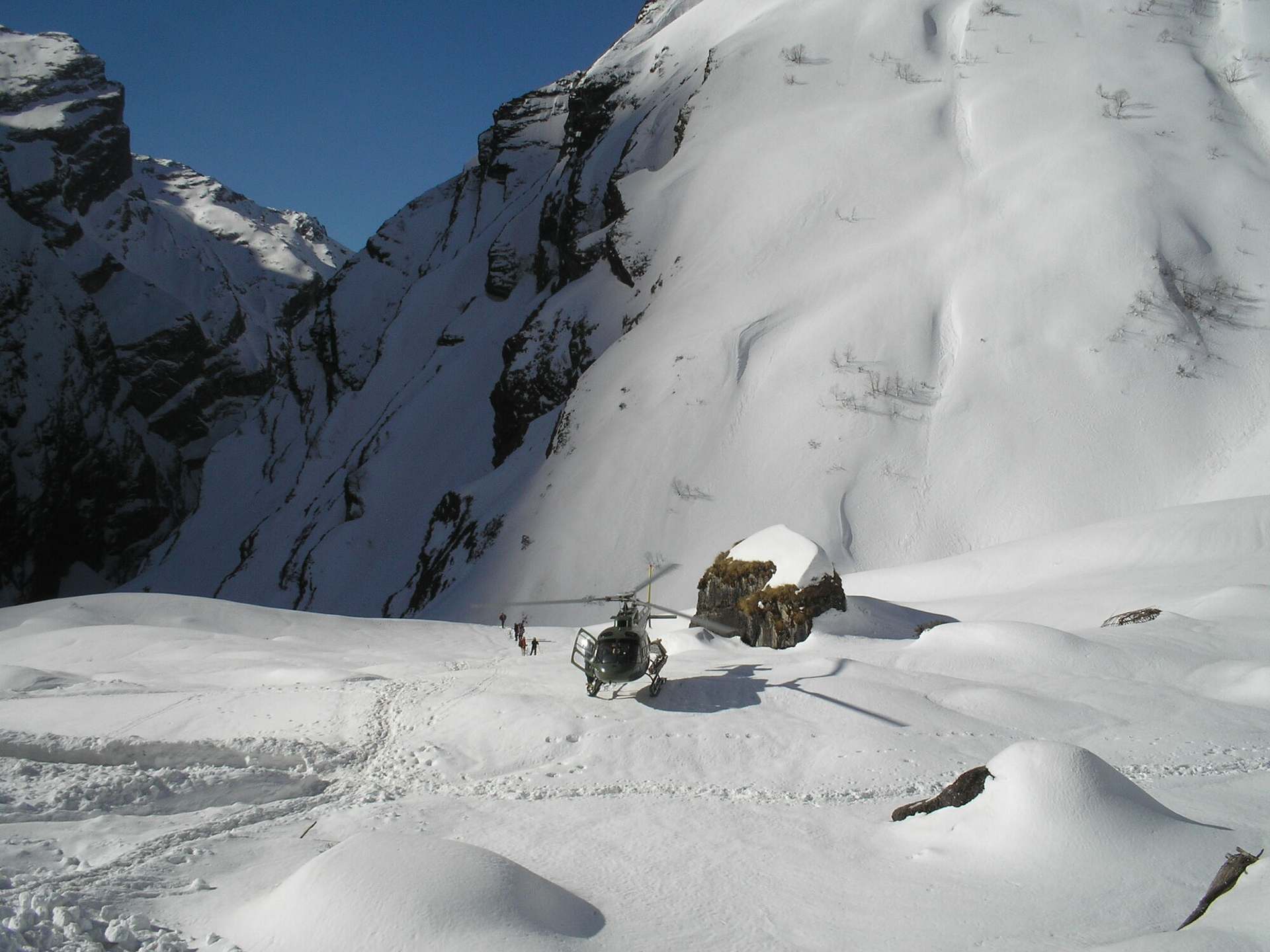
Almost anywhere there is a safe landing surface and the aircraft has the performance for the altitude, which is the real constraint rather than distance. Above about 6,000 m a conventional helicopter cannot land at all, and landings above 5,000 m are commonly split into two shuttles because thin air reduces how much the aircraft can lift. Some areas also require permits or are closed to non-rescue landings.
Are all helicopter operators in Nepal licensed?
+
Every operator listed on Go Heli Nepal holds a current Air Operator Certificate issued by the Civil Aviation Authority of Nepal, and a listing is removed the day a certificate lapses. CAAN certification is what makes a commercial flight legal; trade-body membership is not the same thing and is not a substitute for it.
How long is a helicopter ride in Nepal?
+
Between about 90 minutes and four and a half hours, depending on the route. A short scenic ride out of Pokhara or Biratnagar is around 90 minutes door to door; the Everest Base Camp itinerary from Kathmandu runs about four hours including the landing at altitude and the breakfast stop. The time in the air is usually less than half of that — the rest is ground time, and it is published on each route's own page.
Can anyone book a helicopter ride, or is it only for charters?
+
Anyone can. A shared seat is sold per person on scheduled scenic routes, which makes a helicopter experience in Nepal roughly the price of a domestic flight rather than the price of an aircraft. Chartering the whole helicopter is the other way to buy the same flight, and it becomes the cheaper option at about five passengers. Neither needs an account or an agent, and both are quoted across every certified operator that flies the route.
Is there a helicopter service near me in Nepal?
+
Charter helicopters in Nepal operate from four places: Kathmandu, Pokhara, Biratnagar and Nepalgunj. Everything else — Lukla, Muktinath, the base camps, a village with a football pitch — is somewhere a helicopter flies to rather than somewhere one is based. So the practical question is not which operator is nearest you but which of those four is nearest your route, and the flight desk answers that against the aircraft that is free on your date.
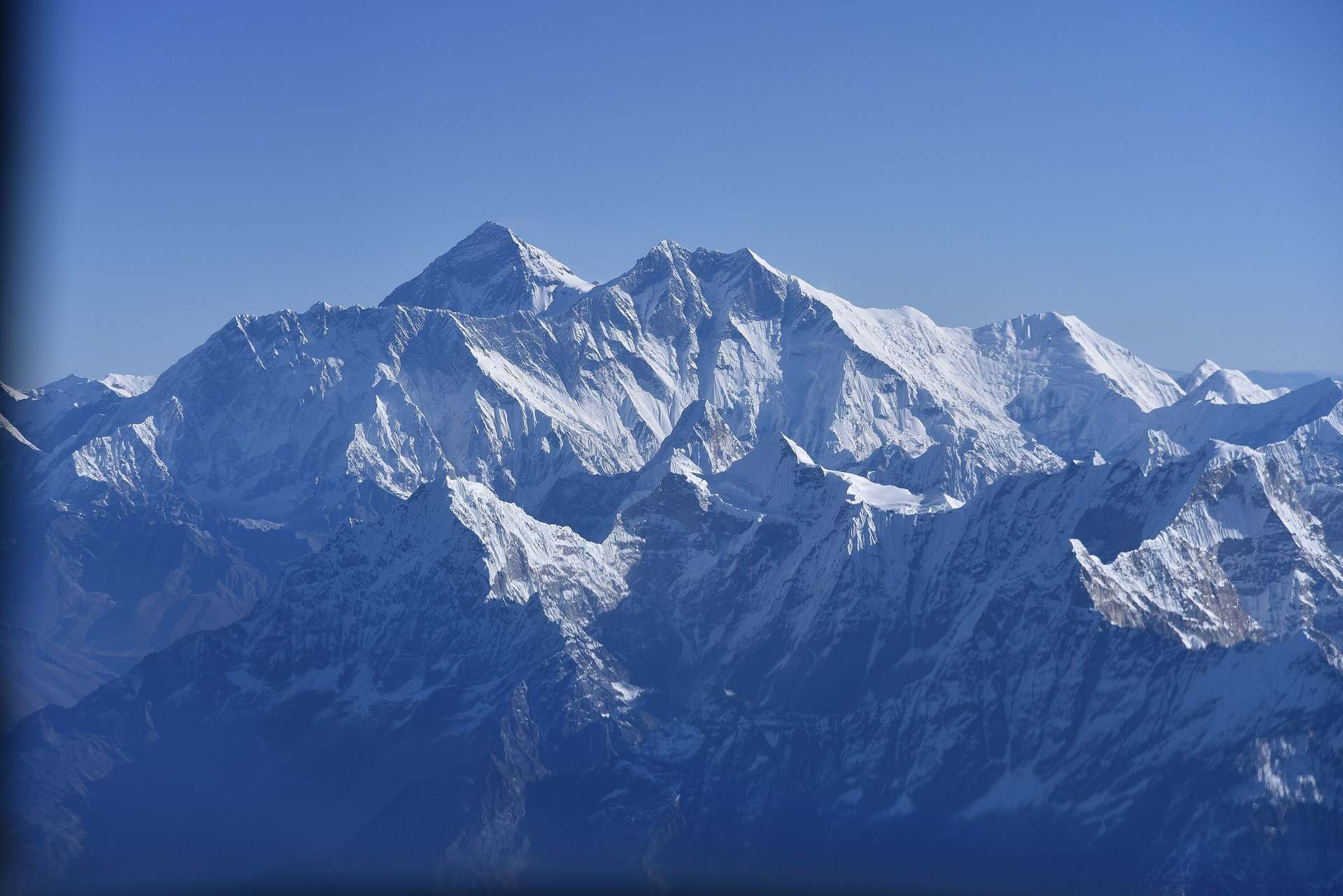 © shankar s. / Wikimedia Commons · CC BY 2.0