
Plan the flight before you ask the price.
Each tool answers a question people ask before they ask for a price: how far, how long, how many of us can go, what it costs each, and which months fly.
- Tools
- 6
- Places in the demo
- 18
- Highest landing
- 5,545 m
- Account needed
- None
Six tools, one question each.
They run on the live routes, fares and landing sites at gohelinepal.com, so each one opens there in a new tab.
How high is the landing?
Pick a place. You get its height in metres and feet, and roughly how much of a sea-level breath is left up there.
- Oxygen is 20.9% of the air at every height a helicopter reaches. What falls is the pressure, so each breath holds fewer molecules of everything.
- The pressure comes from the International Standard Atmosphere, the model aircraft performance charts are drawn against: (1 − 0.0000225577 × metres) to the power 5.25588.
- It is an approximation. The day's weather moves the real pressure by a few per cent, and how a person copes is a question for a doctor.
Altitude at landing
- Elevation
- 5,545 m18,192 ft
- Air pressure
- 505 hPasea level 1,013 hPa
- Oxygen per breath
- ≈ %of a sea-level breath
- Like breathing
- ≈ 10.4%oxygen at sea level
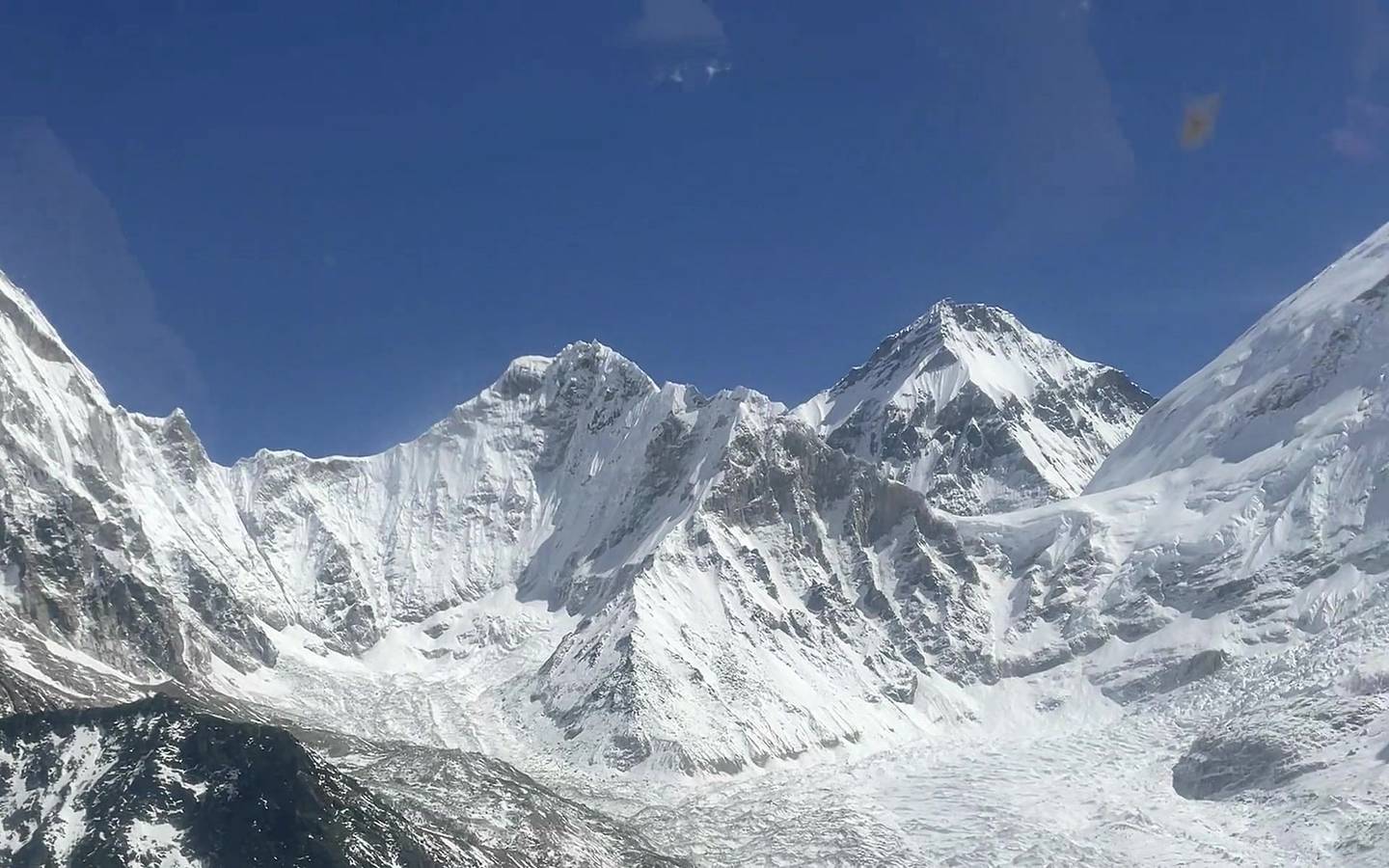
Kala Patthar (NPKP) is a helicopter landing site. Each breath there holds about half the oxygen it would at sea level.
Thin air, in plain figures.
The answers the altitude tool gives on the live site, kept here as they are written there.
Is there less oxygen at high altitude, or is the air just thinner?
The air is thinner. Oxygen makes up 20.9% of dry air at every altitude a helicopter reaches — what falls is the pressure, so each breath contains fewer molecules of everything, oxygen included. At 5,500 m the pressure is about half what it is at sea level, so a breath holds about half the oxygen, which is the same as breathing roughly 10.5% oxygen at the coast.
How is the effective oxygen percentage at altitude calculated?
It is the oxygen fraction of air, 20.9%, multiplied by the air pressure at that height as a fraction of sea-level pressure. The pressure comes from the International Standard Atmosphere, the model every aircraft performance chart is drawn against: pressure falls as (1 − 0.0000225577 × height in metres) raised to the power 5.25588. The result is the oxygen percentage sea-level air would need to give you the same amount per breath.
Does flying to a high helipad affect you differently from trekking there?
The exposure is different in both length and speed. A helicopter reaches a Himalayan landing site in tens of minutes and is usually on the ground for well under an hour, where a trek takes days and sleeps at height. Neither is a statement about whether a particular person is affected — that depends on the person, and it is a question for a doctor rather than a calculator.
Why does altitude decide how many passengers a helicopter can carry?
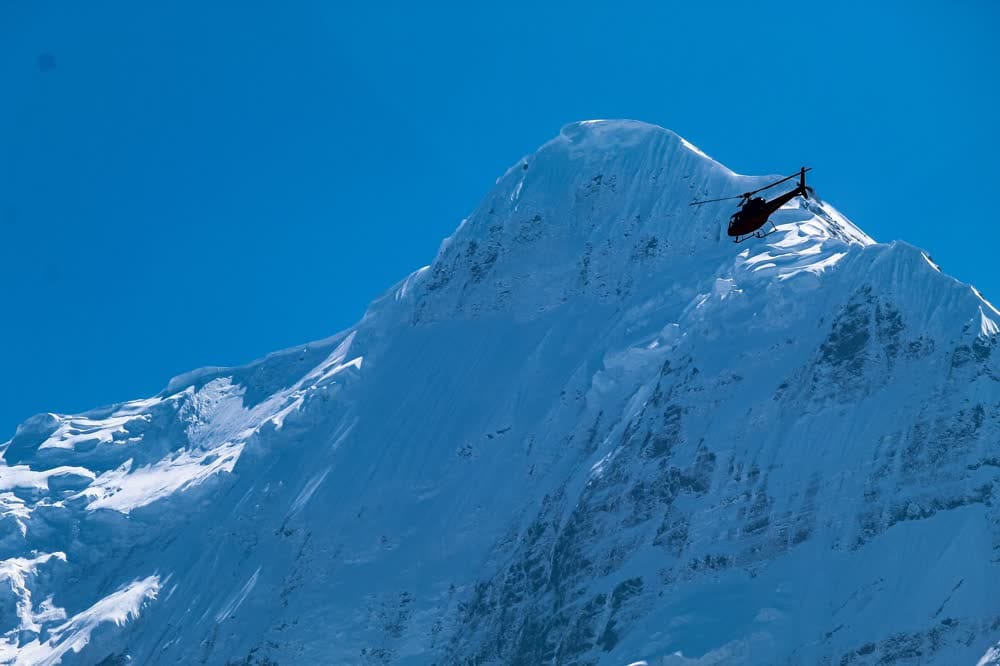
Thinner air gives a rotor less to work with, so the aircraft's maximum weight falls as the landing site gets higher — and the empty aircraft and its fuel come out of that allowance first. A five-seat helicopter is often a two- or three-seat helicopter at a Himalayan helipad, whatever the cabin holds. That calculation is what the payload planner does.
Know the place? Send the date.
Tell the desk where, when and who is flying. We compare every licensed operator that flies it and book you the cheapest, aiming to reply within four hours.