
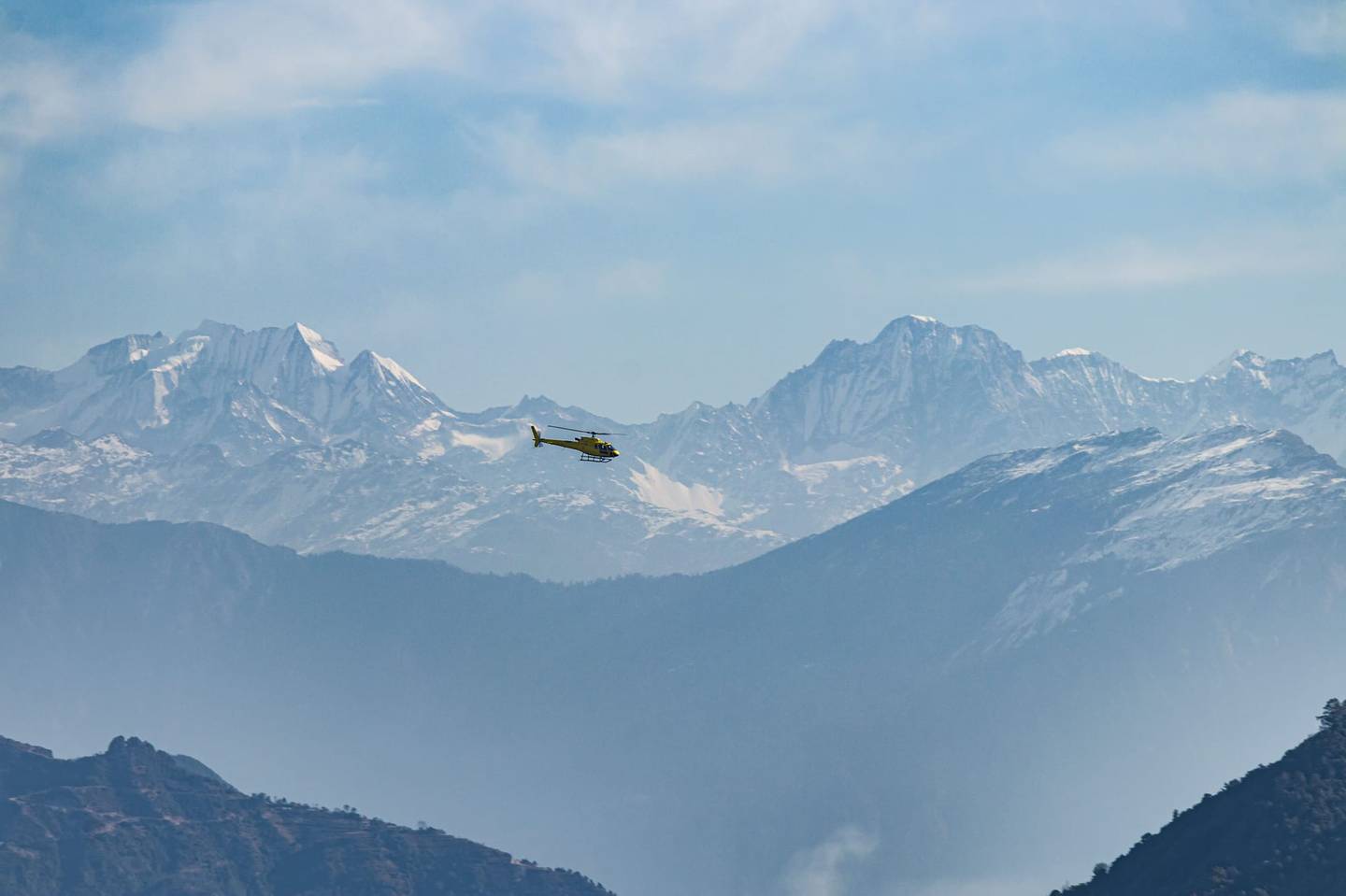
It is the question people think but rarely ask at the check-in desk. If the engine stops at five and a half thousand metres, what happens?
The honest answer is that the aircraft keeps flying, descending, and the pilot flies it to a landing — and that altitude makes that harder rather than impossible. It is also the question underneath "can a helicopter reach Mount Everest", which the one summit landing ever made answers from the other end.
What is autorotation?
When the engine stops driving the rotor, the pilot lowers the collective and the aircraft descends. Air flowing up through the disc keeps the blades spinning, storing energy in them exactly as a sycamore seed spins as it falls.
Near the ground the pilot trades that stored energy for lift, flaring to arrest the descent. Every helicopter pilot practises autorotations again and again in training, and it is a manoeuvre, not a miracle.
Does thin air make autorotation harder?
At 5,500 m the air is little more than half as dense as at sea level, so the rotor has less to work with in both directions. The aircraft descends faster in autorotation, and the flare at the bottom converts less of that speed into lift.
Rate of descent goes up, the margin at the bottom goes down, and the ground is frequently a moraine slope rather than a runway. That is why high-altitude landing sites are chosen as much for what is downhill of them as for the view.
How does a mountain pilot fly to keep the option open?
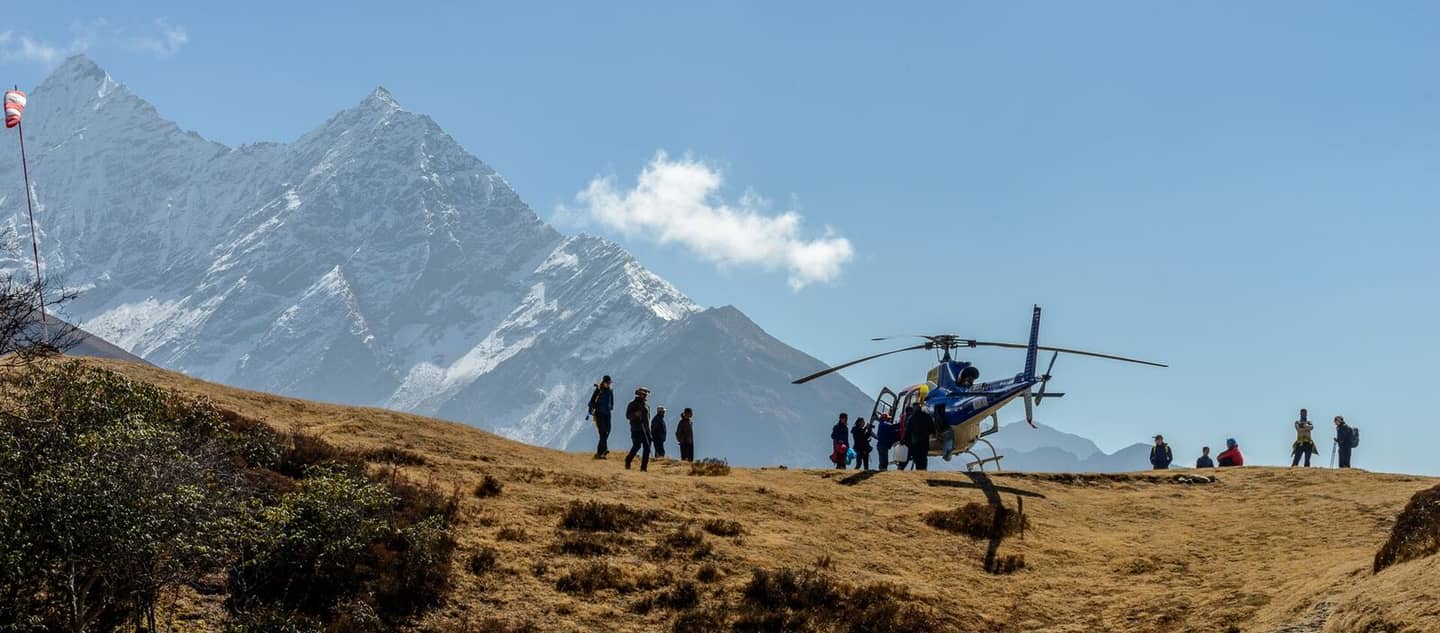
Watch the approach into Kala Patthar on the Everest Base Camp helicopter tour and you will notice the aircraft never sits low and slow over ground it cannot reach. Mountain pilots fly approaches that keep a landable surface inside gliding distance for as much of the profile as the terrain allows.
This is also part of why loads are so tightly controlled. A lighter aircraft autorotates better, and the weight limit you were annoyed about at check-in is one of the numbers that keeps that option open.
Why is Nepal's mountain flying mostly single-engine?
Most Nepali mountain work is flown single-engine, and that surprises people. It is deliberate: the high-altitude single-engine machines have the power-to-weight to operate where a heavier twin cannot, and an engine you cannot lift to altitude protects nobody.
Twins earn their place elsewhere — longer overwater or over-city sectors, heavier loads, night work. Choosing between them is a question about the mission, not about which is generically safer.
Questions this article answers
What happens if a helicopter's engine fails in flight?
When a helicopter's engine fails in flight, the pilot puts it into autorotation rather than letting it fall. The pilot lowers the collective and the aircraft descends, and air flowing up through the rotor disc keeps the blades spinning and stores energy in them. Near the ground the pilot trades that stored energy for lift, flaring to arrest the descent. Every helicopter pilot practises autorotations again and again in training.
Does high altitude make autorotation more dangerous?
High altitude makes an autorotation harder and less forgiving. At 5,500 m the air is little more than half as dense as at sea level, so the aircraft descends faster in autorotation and the flare at the bottom has less air to work with. The ground in the Khumbu is also frequently a moraine slope rather than a runway.
Why is most high-altitude flying in Nepal single-engine?
Most Nepali mountain work is flown single-engine deliberately, because the high-altitude single-engine machines have the power-to-weight ratio to operate where a heavier twin cannot. Twins earn their place on longer over-water or over-city sectors, heavier loads and night work, so choosing between them is a question about the mission rather than about which type is generically safer.
How do mountain pilots reduce the risk on a high approach?
Mountain pilots fly approaches that keep a landable surface inside gliding distance, which is why an aircraft on approach to Kala Patthar never sits low and slow over ground it cannot reach. Tight load control is part of the same discipline: a lighter aircraft autorotates better, so the weight limit enforced at check-in is one of the numbers keeping that option open.