The only helicopter landing on the summit of Everest
Go Heli Nepal5 min readReviewed
Photograph: © Vyacheslav Argenberg / Wikimedia Commons · CC BY 4.0
In May 2005 a test pilot put an AS350 B3 on the summit and held it there four minutes. Twenty years on nobody has repeated it, and nobody sells it.
Ask whether a helicopter can land on Mount Everest and you get two confident, opposite answers. Both are wrong in the way that matters. It has been done — once — and it is not something you can buy a seat on.
What you can buy is the Everest Base Camp landing tour, which puts you on the ground at 5,545 m. The full answer to whether a helicopter can land on Everest is the guide this post sits under; what follows is the one morning it actually happened.
When did a helicopter land on the summit of Everest?
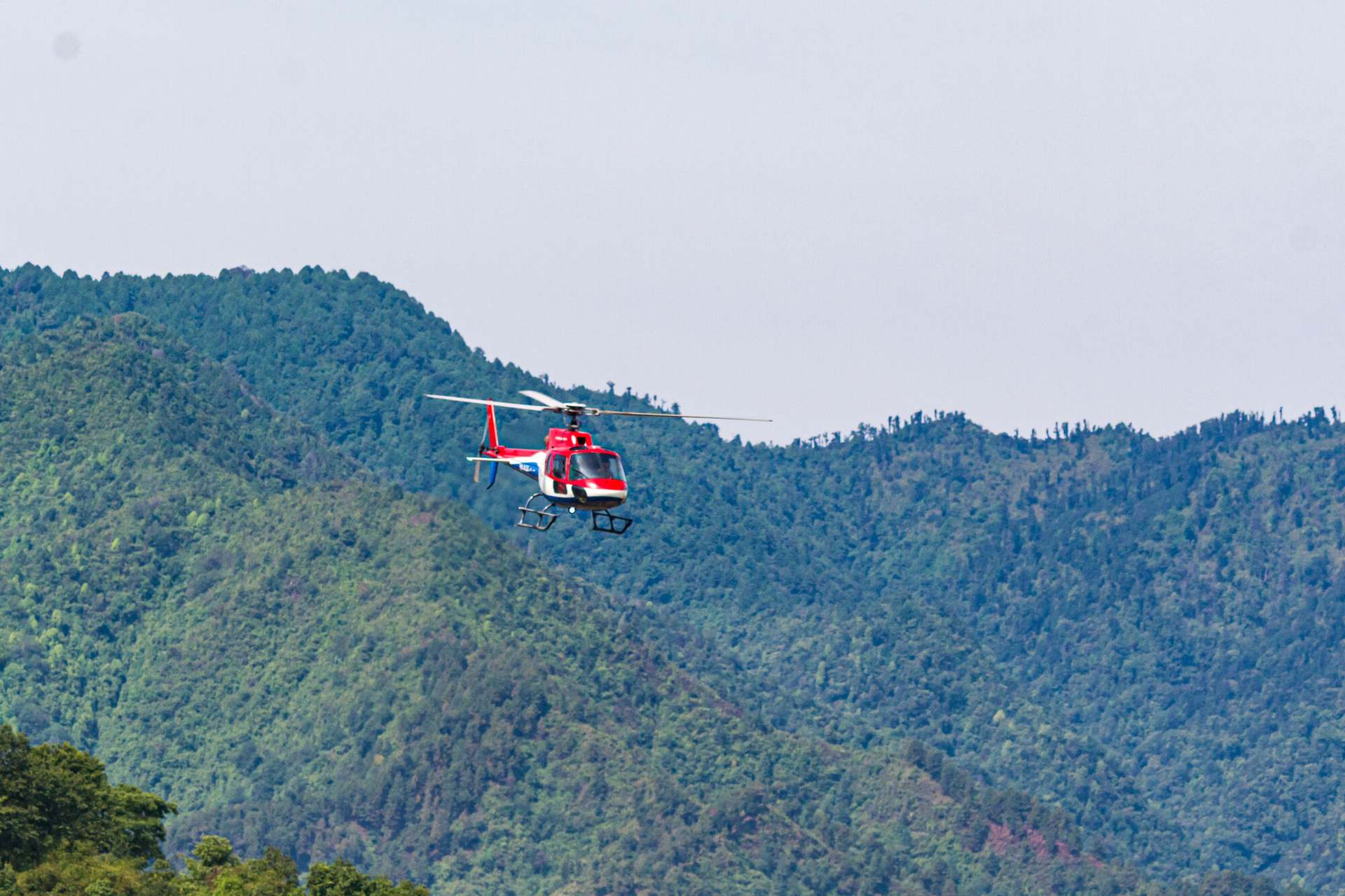
Didier Delsalle, a test pilot for what was then Eurocopter, flew a production AS350 B3 from Lukla to the summit of Everest and set it down on the snow at 8,848 m. He held it there for close to four minutes, which mattered: the Fédération Aéronautique Internationale requires the aircraft to settle, not touch, for a landing to be certified.
He did it again the next day, because a record has to be repeatable to be ratified. Then he flew home and the industry moved on.
What had to be stripped out of the aircraft?
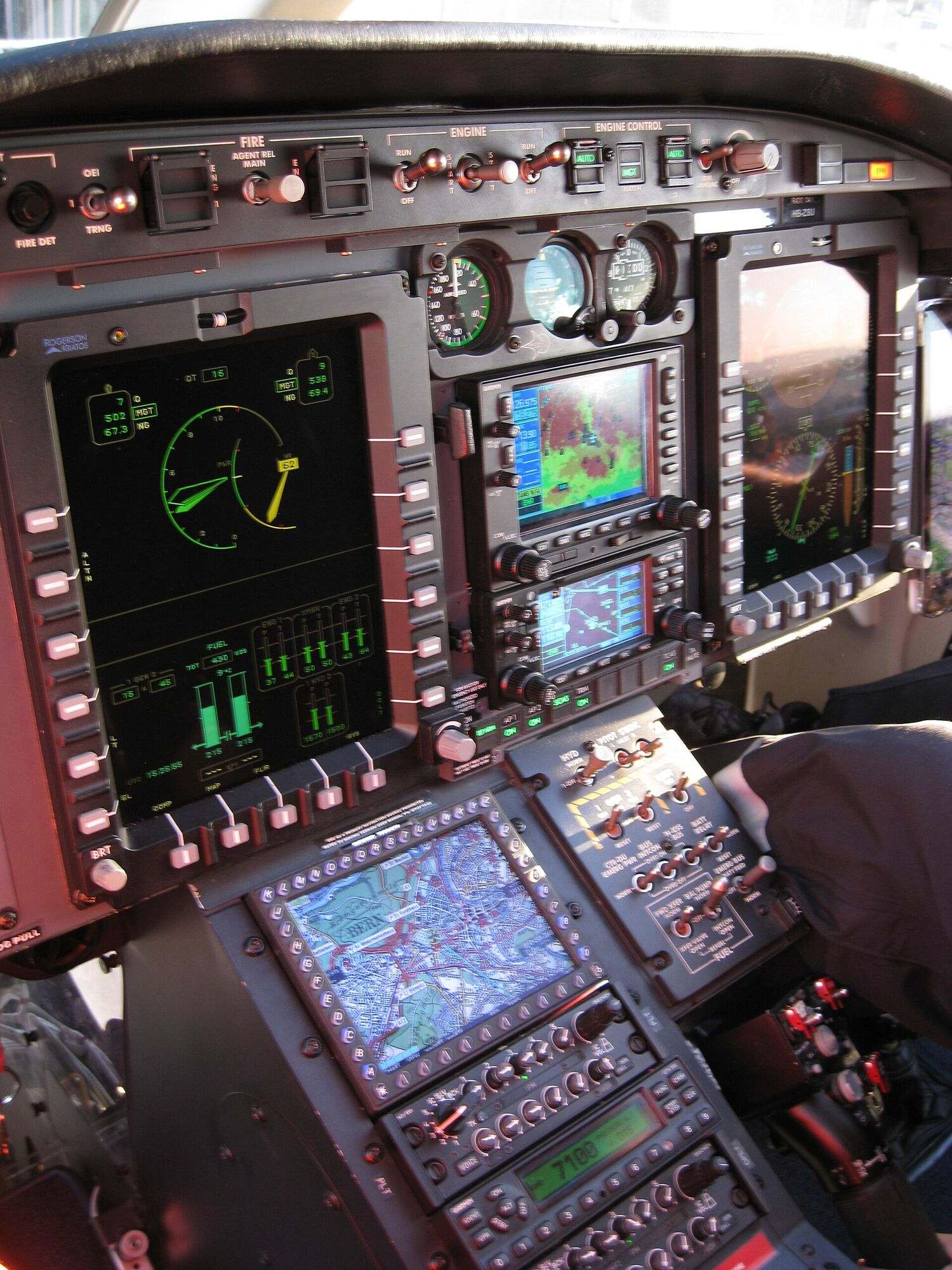
The aircraft was a standard B3 with everything removable removed: no passenger seats, no cargo, the minimum fuel that would get it up and back down. One pilot, no crew.
That is not a technicality. At 8,848 m there is about a third as much air per cubic metre as at sea level, so the rotor makes about a third of the lift, and the engine — burning the same thin air — has correspondingly less power to spin it with. The margin Delsalle flew in was measured in kilograms.
Why has nobody repeated the summit landing?
The flight proved a point about the B3's engine at altitude, and the point stayed proved. There was no commercial demand to repeat it, because there is no version of a summit landing that carries a passenger.
There is also the small matter of the weather. From October to May the jet stream sits directly on the summit ridge at over 160 km/h. Delsalle had a window; most days do not have one.
How high can a helicopter land on Mount Everest today?
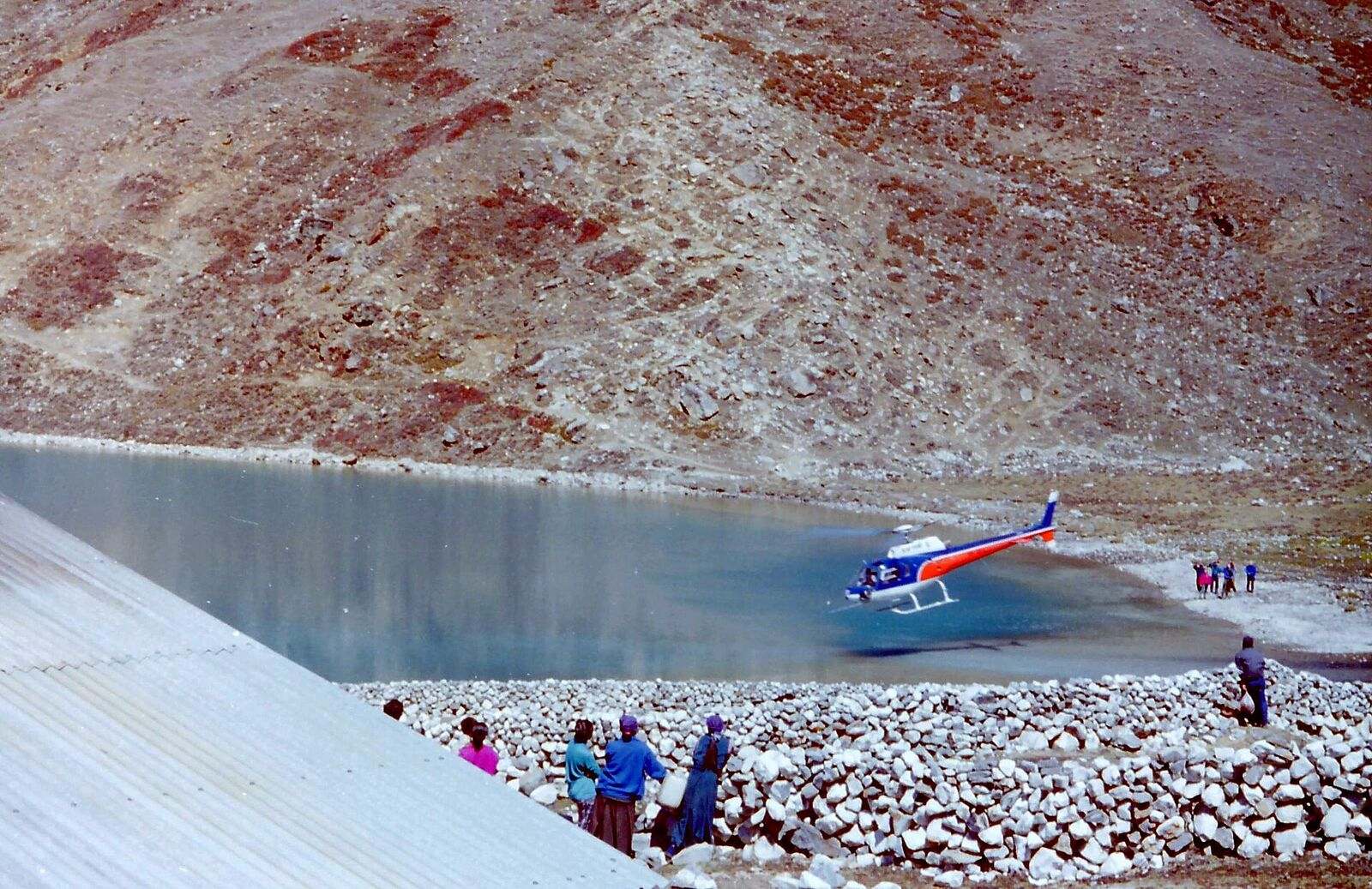
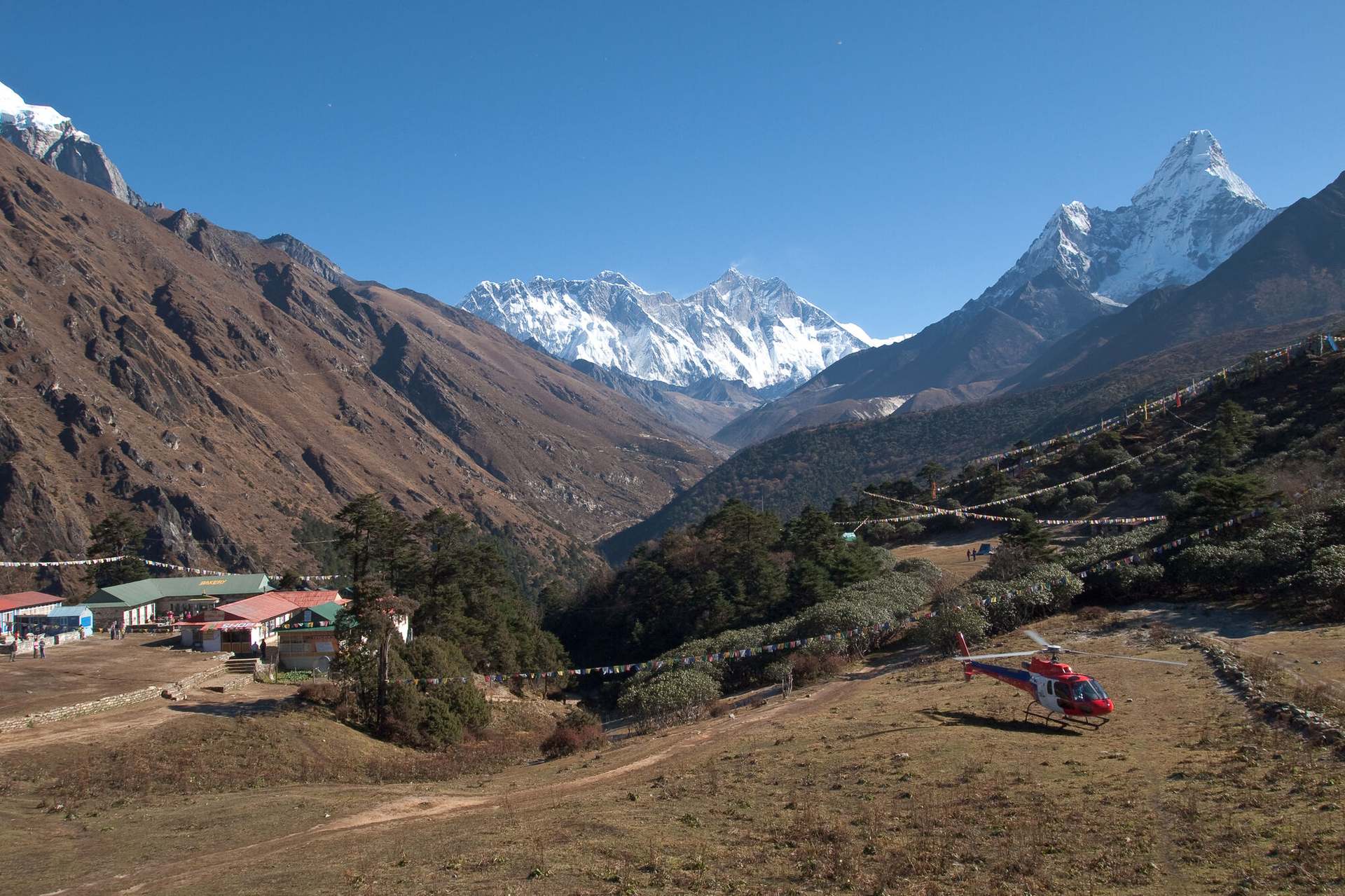
The useful legacy is not the summit. It is what the same aircraft type does at 5,000 to 6,500 m, day in and day out, in the hands of Nepali crews: base camp landings, Camp 2 evacuations, and the longline extractions a rescue depends on from ground no aircraft can touch.
That is the flying that saves lives in the Khumbu every season, and it is the reason the B3 and its successor the H125 are the aircraft you will find yourself sitting in on an Everest morning.
FAQs
Has a helicopter ever landed on the summit of Mount Everest?
Yes, once. On 14 May 2005 Didier Delsalle, a test pilot for what was then Eurocopter, flew a production AS350 B3 from Lukla to the summit of Everest and set it down on the snow at 8,848 m, holding it there for close to four minutes. He repeated the landing the next day, because the Fédération Aéronautique Internationale requires a record to be repeatable to be ratified.
Can you book a helicopter to the summit of Everest?
No. There is no commercial helicopter flight to the summit of Everest and there never has been. The 2005 landing was flown in an aircraft stripped of its passenger seats and cargo with the minimum fuel to get up and back down, so there is no version of a summit landing that carries a passenger.
Why can't helicopters normally land on Everest's summit?
At 8,848 m there is about a third as much air per cubic metre as at sea level, so the rotor makes roughly a third of the lift while the engine, burning the same thin air, has correspondingly less power to spin it. The margin Delsalle flew in was measured in kilograms. From October to May the jet stream also sits directly on the summit ridge at over 160 km/h.
How high can a helicopter actually land in Nepal?
The routine high-altitude work in Nepal happens between about 5,000 and 6,500 m: base camp landings, Camp 2 evacuations and longline extractions from ground no aircraft can touch. That band, flown daily by Nepali crews in AS350 B3 and H125 aircraft, is the real legacy of the 2005 summit landing rather than the summit itself.
Ready to fly this route?
Compare every licensed operator that flies it, with seat and whole helicopter prices side by side.
See operators and pricesThe full answer, kept up to date: Can a helicopter land on Mount Everest?