
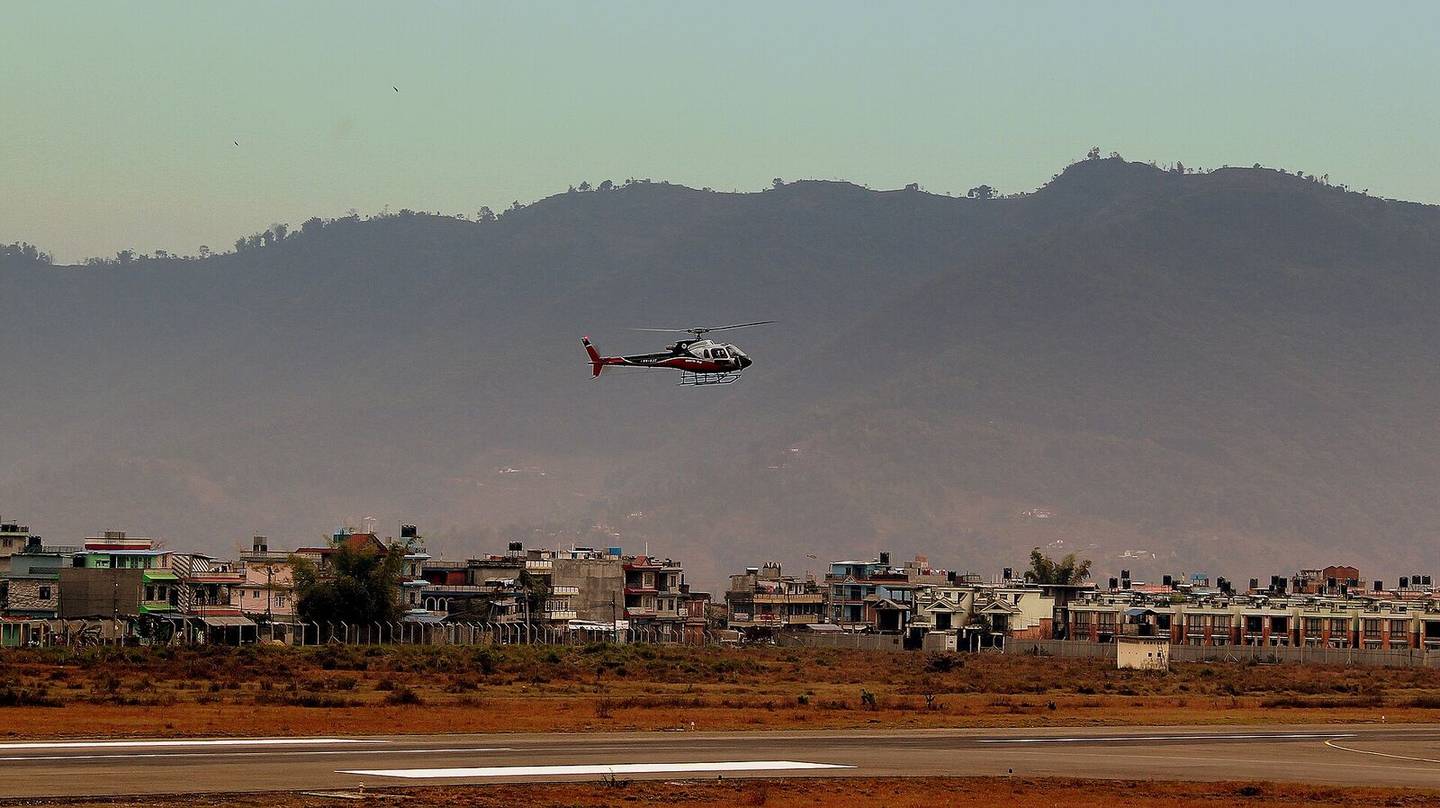
Helicopter operators in Nepal commonly set a per-passenger weight limit of about 75 kg (165 lb), and it includes your day bag. They weigh you at check-in because thin air cuts lift: an aircraft that carries five out of Kathmandu at 1,338 m (4,390 ft) may lift only two at Kala Patthar, 5,545 m (18,192 ft).
Every operator publishes its own figure and every one of them will put you on a scale. Travellers sometimes read this as rudeness. It is the single most important safety number on a high-altitude flight, and it is most of the reason there is a ceiling on where a helicopter can land at all.
Why does thin air reduce a helicopter's lift?
A helicopter rotor generates lift by moving air. At 5,500 m there is roughly half as much air per cubic metre as at sea level, so the same rotor at the same speed produces far less lift.
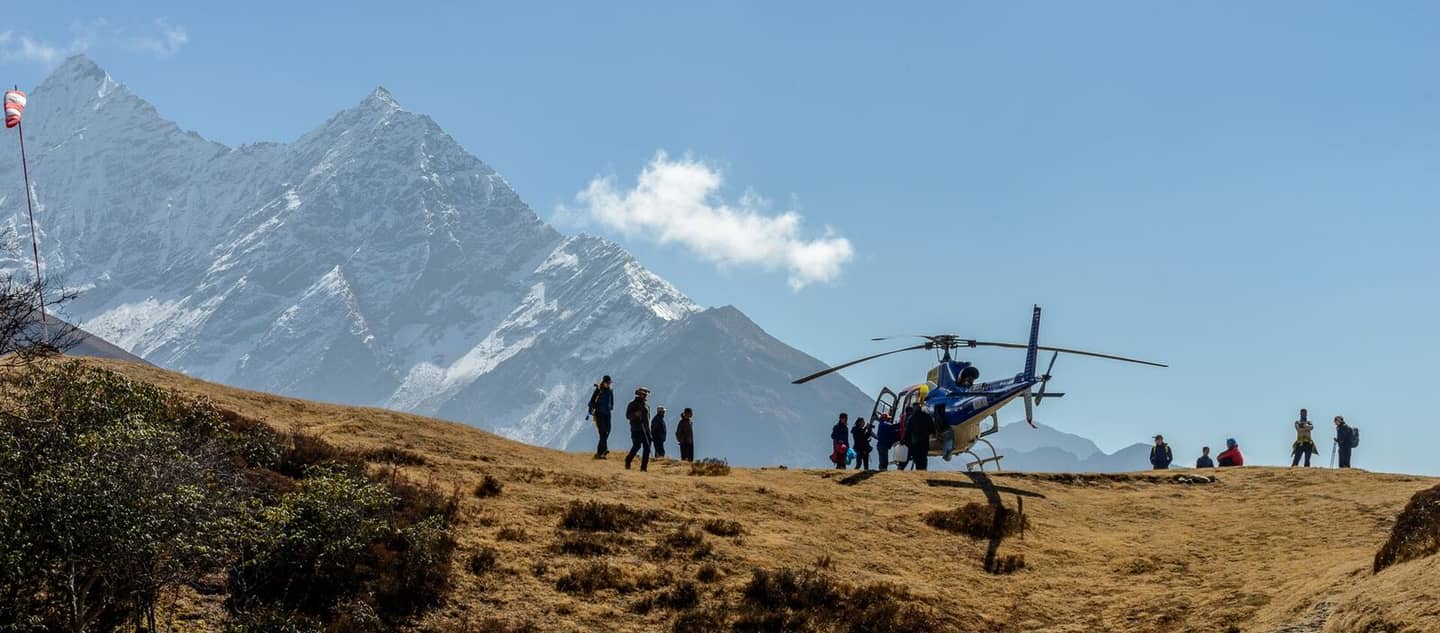
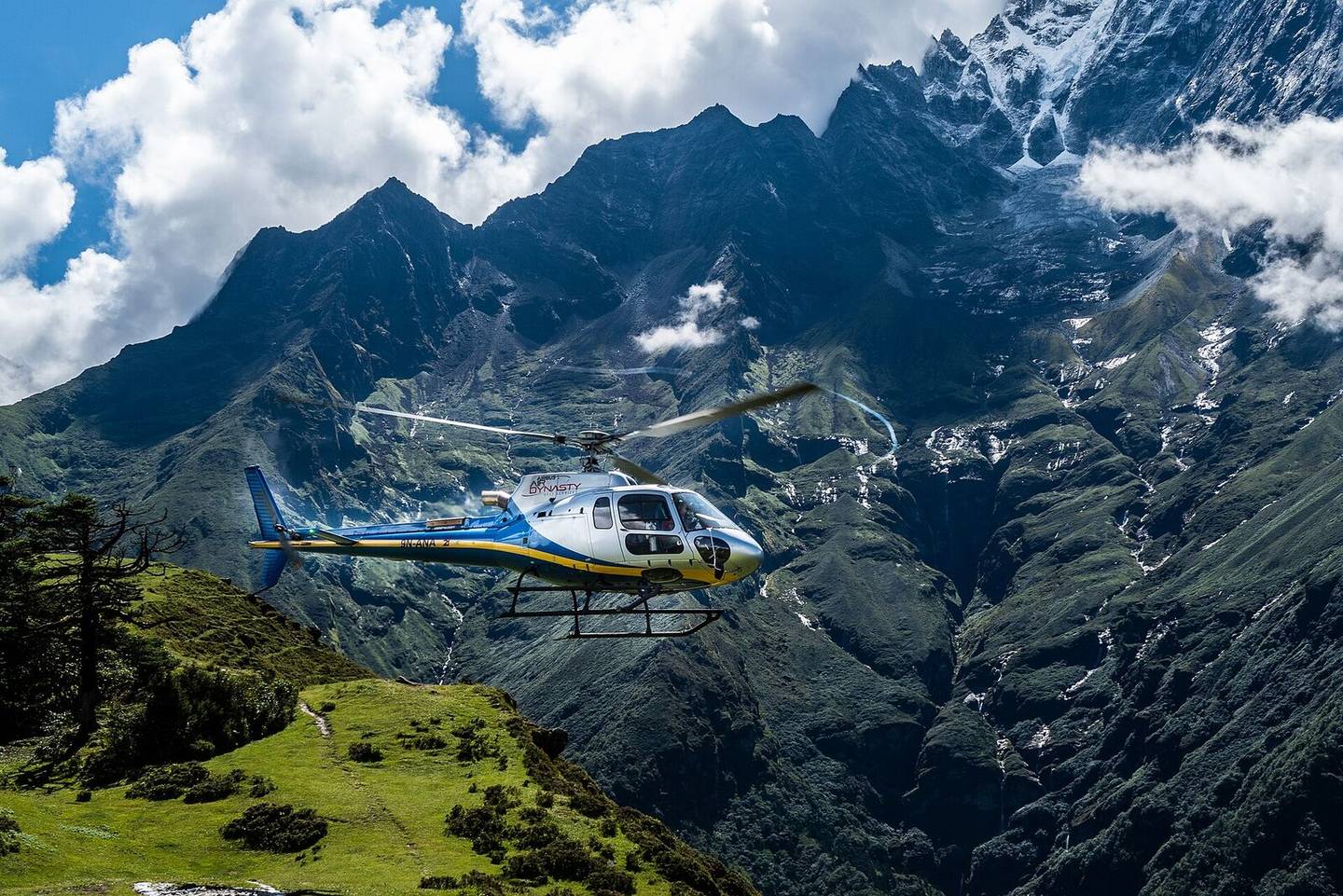
The aircraft that lifted five people easily out of Kathmandu at 1,338 m may only manage two at Kala Patthar, where the Everest Base Camp helicopter tour lands. That is not a fault; it is the published performance envelope. It is also the honest answer to whether a helicopter can reach Mount Everest: reaching it is a question about weight before it is a question about distance.
How much weight can a helicopter carry at each altitude in Nepal?
Up to about 3,840 m (12,600 ft) a single-engine H125 can still hover out of ground effect at its full 2,250 kg maximum take-off weight, so the weight limit is the certificate's. Above that height the air sets the limit instead, and at Kala Patthar a group of five is flown up two or three at a time.
That line falls between Lukla, at 2,845 m, where a full cabin is ordinary, and the high Khumbu landing sites, where it is not.
| Where | Elevation | Air pressure, share of sea level | What limits the load | Passengers per lift |
|---|---|---|---|---|
| Kathmandu | 1,338 m (4,390 ft) | 85% | Maximum take-off weight, 2,250 kg | Five, comfortably |
| Lukla | 2,845 m (9,334 ft) | 71% | Maximum take-off weight, 2,250 kg | A full cabin of five is ordinary |
| H125 hover ceiling at full weight | 3,840 m (12,600 ft) | 62% | From here up, the day's hover performance | Fewer as the site gets higher |
| Kala Patthar | 5,545 m (18,192 ft) | 50% | The day's power-limited hover weight | Two or three, so groups fly in shuttles |
Indicative for a single-engine AS350 B3 / H125 on a standard morning, not a load sheet. Pressure shares are from the International Standard Atmosphere; 2,250 kg and the 3,840 m hover ceiling out of ground effect are Airbus's published H125 figures, explained in helicopter payload, weight and seating capacity. Enter your group's real weights in the payload planner to see how it splits; the number that binds your flight is the one on your booking confirmation.
Why is a high landing flown in two shuttles?
Landings above 5,000 m are commonly flown in two shuttles: the aircraft drops two passengers, returns for the others, then collects everyone. Your time on the ground is short by design. The payload planner will tell you how your own group splits before you ask an operator.
Your day bag counts towards the limit. Leave the main luggage at the hotel — every operator expects you to.
What happens if you understate your weight?
If your group weighs more than declared, the crew has three options: split the landing, downgrade the itinerary, or refuse the flight. All three cost you more than telling the truth on the booking form.
Questions this article answers
Why do helicopter operators in Nepal weigh passengers before a flight?
Nepali helicopter operators weigh passengers because total weight is the single most important safety number on a high-altitude flight. A rotor generates lift by moving air, and at 5,500 m there is roughly half as much air per cubic metre as at sea level, so the same aircraft produces far less lift. The scale at check-in is how the crew confirms the load is inside the published performance envelope.
What is the passenger weight limit on a helicopter flight in Nepal?
Every operator in Nepal publishes a per-passenger weight limit, commonly around 75 kg, and it includes whatever you carry into the cabin. The limit is not uniform across the country because it depends on the aircraft type and on the altitude of the landing site, so the figure that matters is the one on your own booking confirmation.
Why are high-altitude helicopter landings flown in two shuttles?
Landings above about 5,000 m in Nepal are commonly flown in two shuttles: the aircraft drops two passengers, returns for the others, then collects everyone. An aircraft that lifted five people easily out of Kathmandu at 1,338 m may only manage two at Kala Patthar, so splitting the load is how a full group reaches a high landing site at all.
Does hand luggage count towards the helicopter weight limit?
Hand luggage counts towards the per-passenger weight limit on a Nepali helicopter flight, day bag included, which is why every operator expects main luggage to stay at the hotel. Weight is weight to a rotor, and there is no separate allowance that thin air respects.
What happens if your group weighs more than you declared?
If a group weighs more than it declared, the crew has three options: split the landing into shuttles, downgrade the itinerary, or refuse the flight. All three cost more time and money than an honest figure on the booking form, and the decision is made at the pad rather than negotiated.