
The Nepal helicopter rescue scam is an insurance fraud in which foreign trekkers were flown off the trail for illnesses they did not have, and in which real shared flights were billed to insurers as several separate rescues. Nepal Police charged 32 people over it in March 2026.
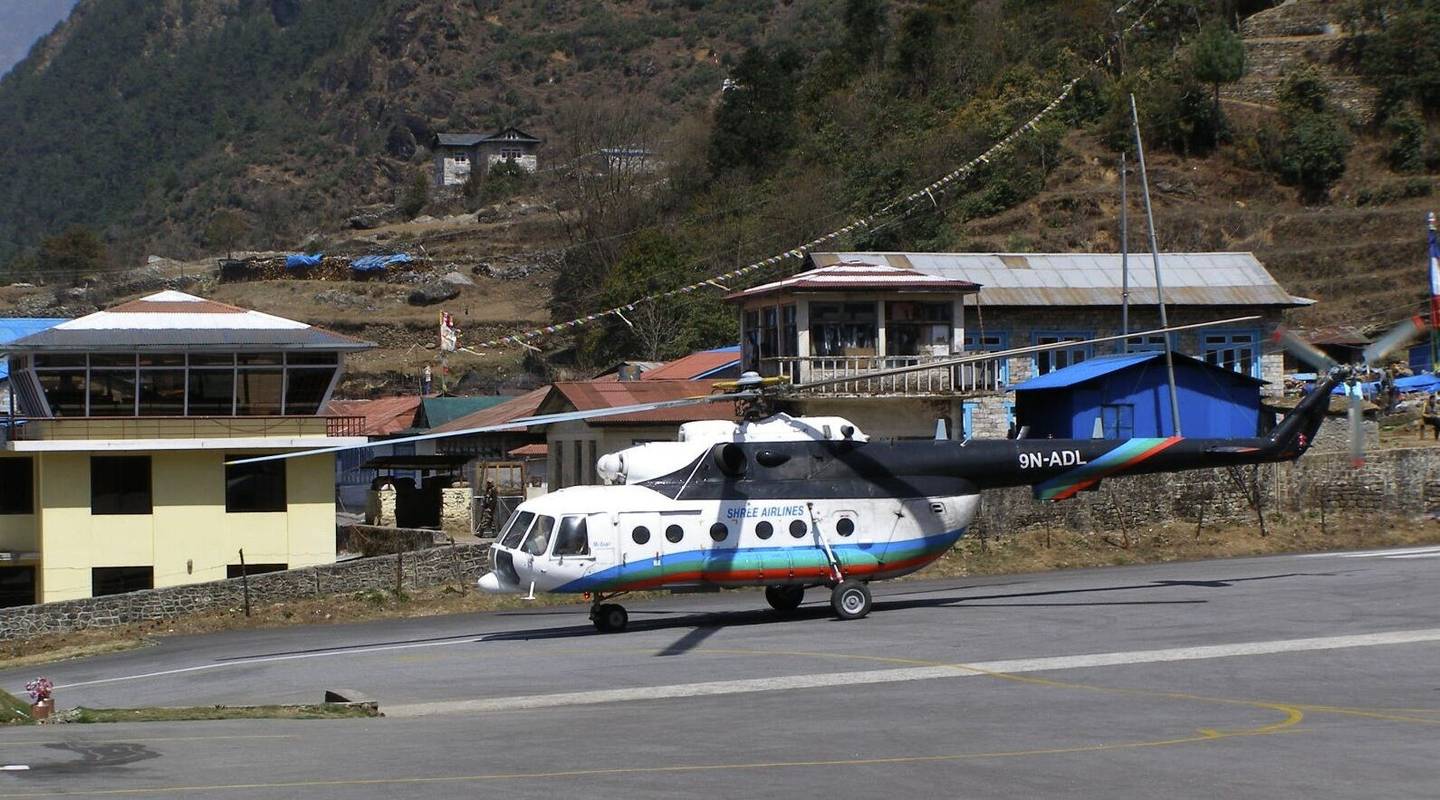
The flights at the centre of the case were on the trekking routes of the Khumbu, in north-eastern Nepal, the region reached through Lukla's Tenzing-Hillary Airport. The fraud was not in the flying. It was in the paperwork that followed the flying, which is why much of it was invisible to the people on board.
If somebody in your group is unwell right now, helicopter rescue is the page to act on. This one is about what the case found, and how a trekker avoids an unnecessary or inflated evacuation.
What was the Nepal helicopter rescue scam?
The story has two chapters, eight years apart.
A Nepali government fact-finding committee reported on helicopter rescue fraud in July 2018. It had reviewed ten helicopter companies, six hospitals and 36 travel, trekking and rescue agencies, and its report ran to some 700 pages, as the Kathmandu Post and CNN both reported at the time. The committee found insurance claims filed more than once for a single flight. It also found trekkers being pressed into airlifts they had not asked for.
The government's response was a reporting requirement. Helicopter companies, trekking agencies, hospitals and insurers were told to submit the details of rescue flights, treatment and billing to the Tourist Search and Rescue Committee, the Tourist Police and the Department of Tourism.
The requirement did not end the practice. The Kathmandu Post reported in January 2026 that the racket was still flying seven years on. Nepali reporting attributes part of the lost momentum to the death of the tourism minister who received the 2018 report, who was killed when a helicopter came down in Taplejung in February 2019.
The second chapter is a criminal case. Nepal Police's Central Investigation Bureau arrested six executives from three rescue and helicopter companies in January 2026. Police put the sum claimed from foreign insurers at close to US$19.7 million and the number of fake rescues at around 300, as OCCRP and the Himalayan Times reported. Prosecutors filed charges against 32 people in March 2026, on counts including organised crime and money laundering.
None of this has been proved. The charges are allegations, the accused have not been tried, and companies named when parts of the 2018 report leaked said at the time that they had been tainted without due process.
How did the fraud actually work?
Police describe a chain rather than a single culprit, and each link took a share.
It began on the trail. Investigators say guides persuaded trekkers that a helicopter would come if they said they were ill. In some accounts the illness was induced rather than invented: police allege that food was adulterated to make clients sick. That is the most serious allegation in the case and the least corroborated, and it remains under investigation.
The money moved as commission. OCCRP reported a commission of roughly 20 to 25 per cent shared among guides, helicopter operators, hospital staff and middlemen. One hospital director said on a recorded statement that his hospital had paid commission out of its earnings to trekking and rescue companies.
Then came the billing, which is where the fraud was actually committed. Investigators describe a single-flight, multiple-billing practice: four trekkers carried on one aircraft, on one date, on one manifest, with claims submitted to four insurers as four separate private rescues.
Hospitals mattered because few of them took foreign insurance. Defendants said certain hospitals were preferred by rescue agencies because they were among the only ones in Nepal that accepted it, which concentrated the whole chain on a short list of addresses in Kathmandu.
Where in Nepal did the fake rescues happen?
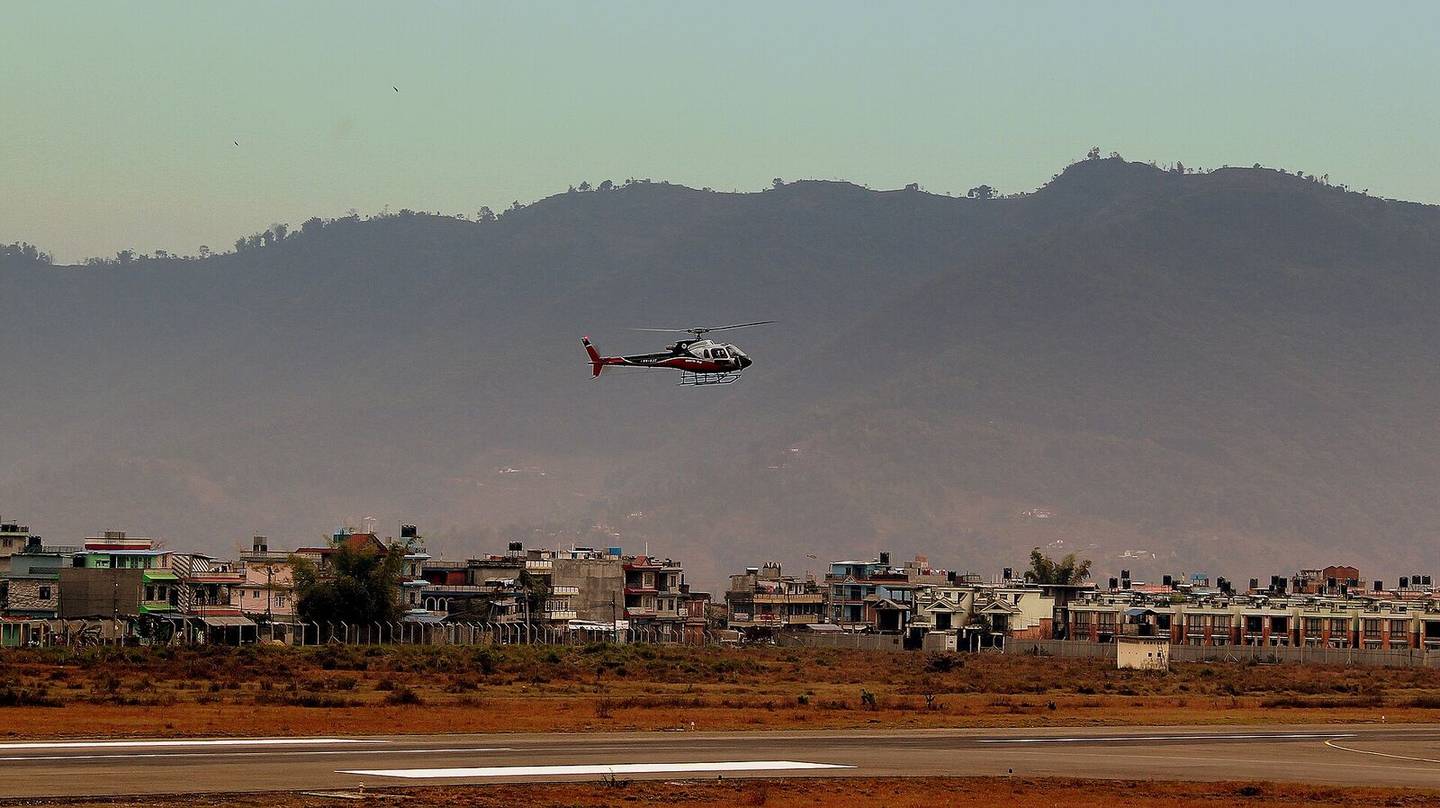
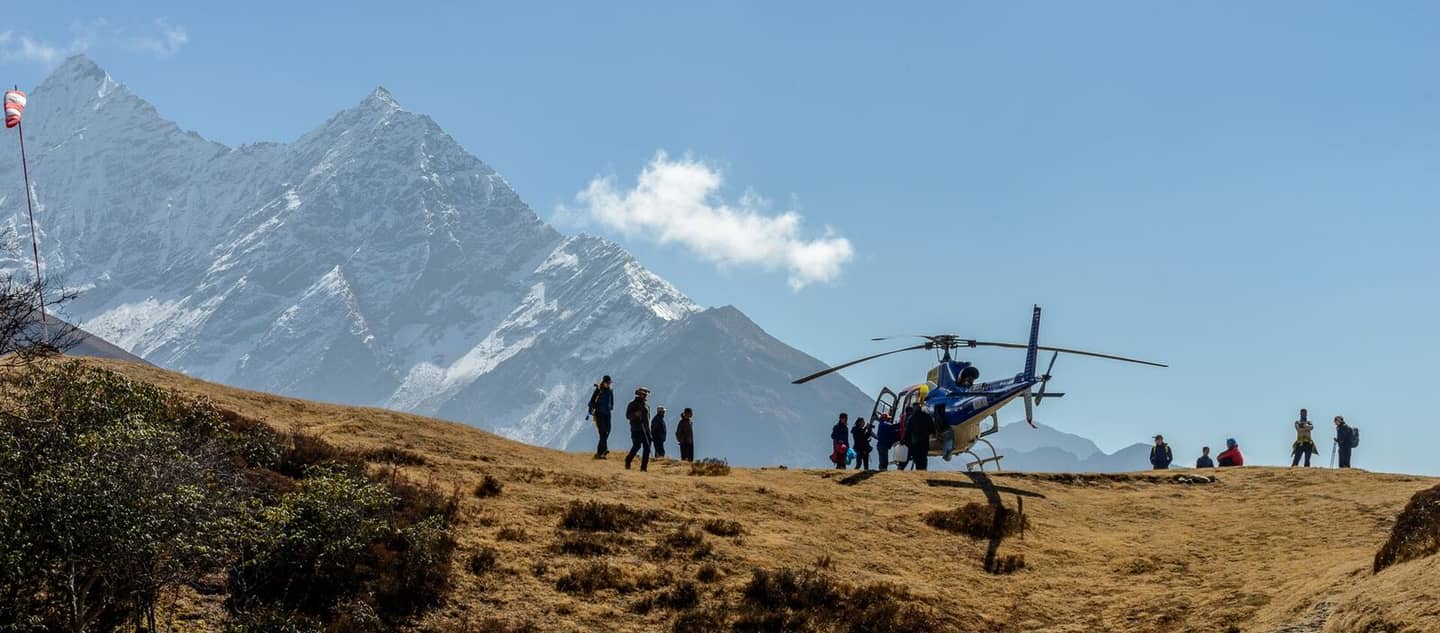
Reporting places the flights at the centre of the case primarily on the trekking routes leading to Everest Base Camp, in the Khumbu region of north-eastern Nepal. The gateway to those routes is Lukla's Tenzing-Hillary Airport, and the trail above it climbs through Namche Bazaar and Dingboche to Everest Base Camp at 5,364 m.
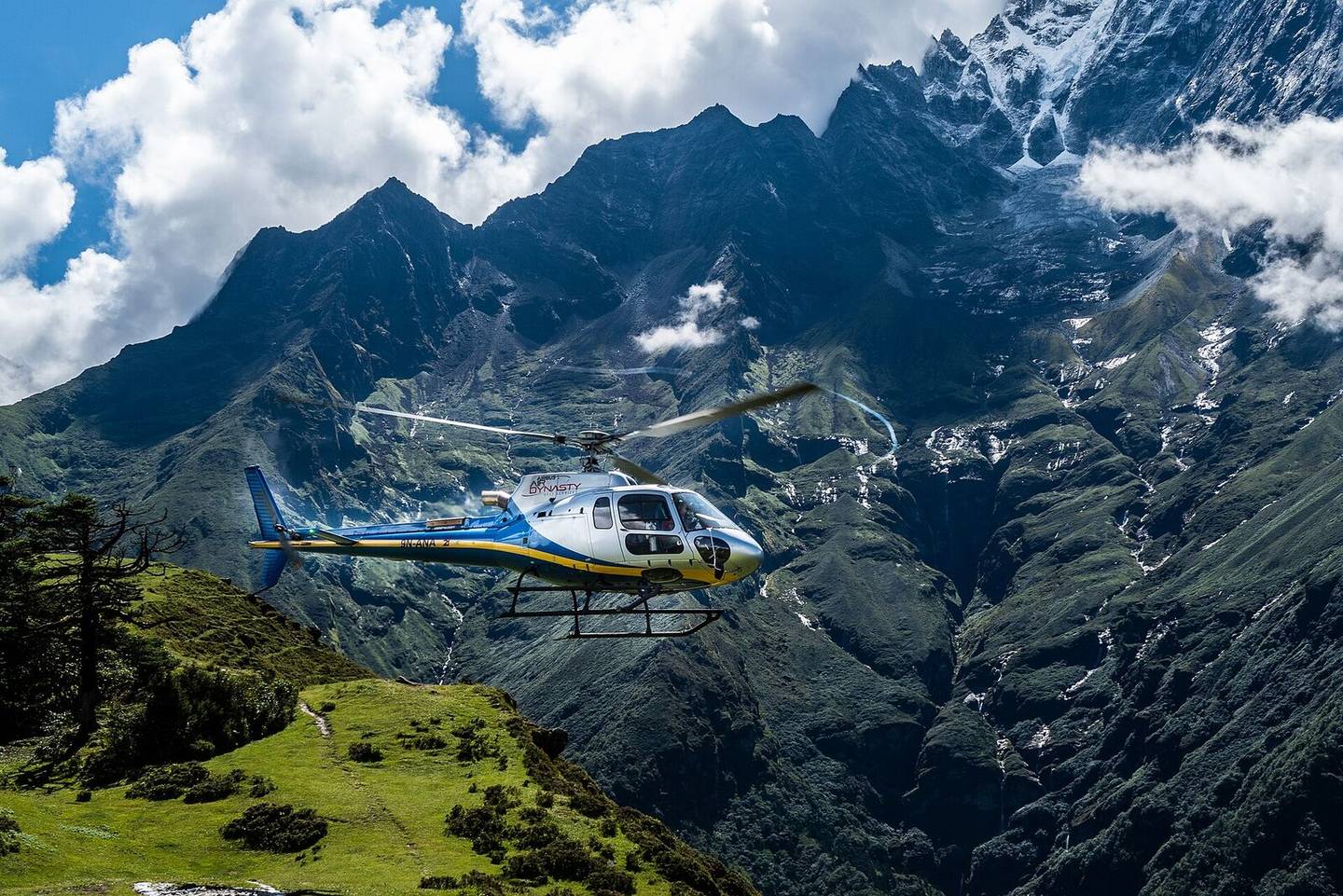
The geography of the fraud is not the geography of difficulty. The Khumbu is not the hardest ground in Nepal to fly a rescue in, and the aircraft that work it are not doing anything exotic when they land at a village helipad in the morning air.
What the Khumbu has is commercial density: the most trekkers, the most helipads, a short hop back to Kathmandu, and a walking population almost all of whom are insured by foreign companies. The fraud followed the money, not the terrain. A reader working out where to be careful should look for those four conditions rather than for altitude.
None of this concerns search and rescue in Nepal, which is the separate business of finding somebody who is missing and is run by the police and the armed forces rather than by charter operators.
How many rescue flights were actually fake?
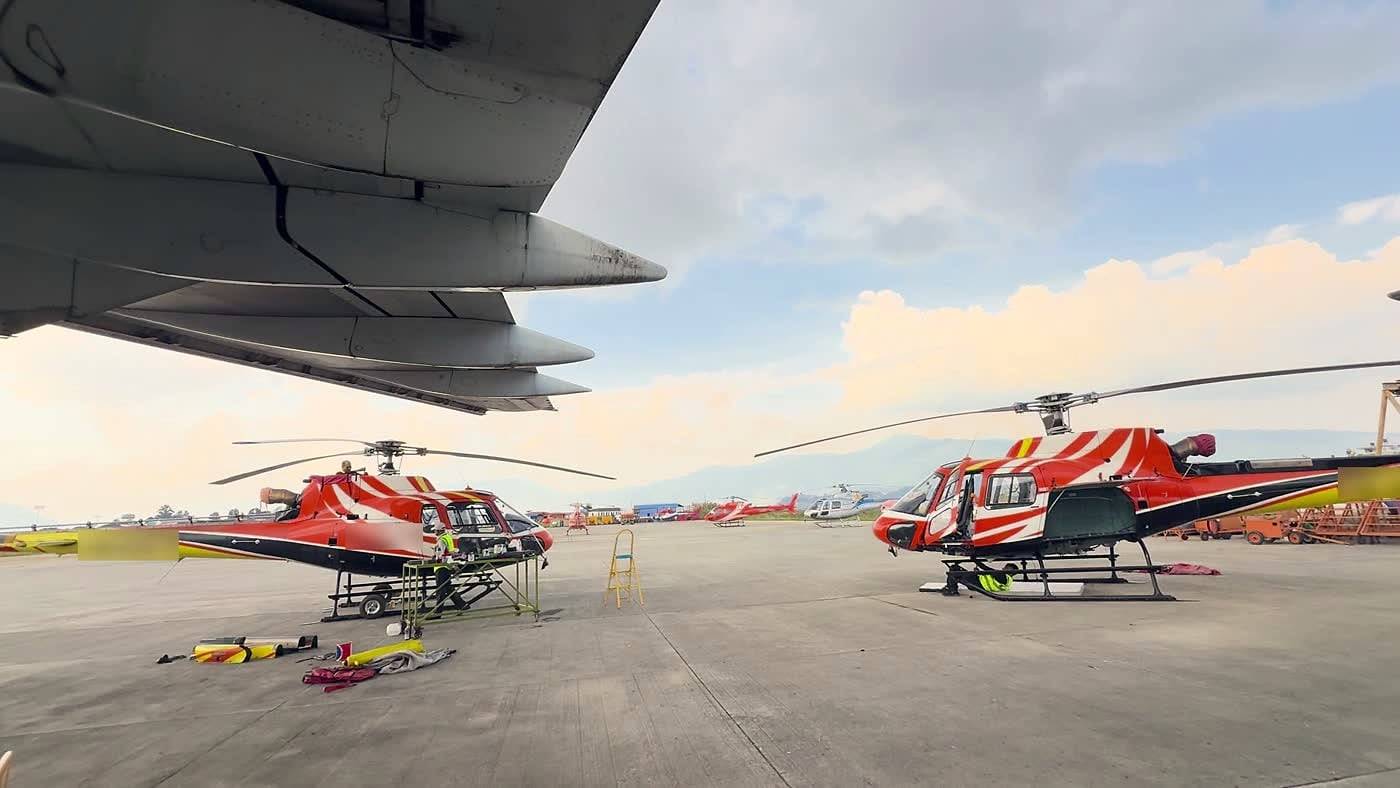
Investigators gave the Kathmandu Post two fleet-level figures, and they are the only numbers in the case that can be turned into a rate. Mountain Rescue Service was said to have carried out 171 fake rescues across 1,248 charter flights. Nepal Charter Service was said to have carried out 75 across 471.
Taken together that is 246 fake rescues out of 1,719 flights, or 14.3 per cent: about one flight in seven.
The inverse is the figure worth carrying up the trail. On the investigators' own numbers, roughly six of every seven flights those two fleets flew were genuine rescues of people who needed them.
That is why refusing the helicopter is the wrong lesson to take from this case, and it is the lesson the coverage is most likely to produce. A trekker with high-altitude pulmonary oedema who talks themselves out of an evacuation because they have read about a fraud has made the more dangerous mistake by a wide margin. The defence is not to distrust the aircraft. It is to control the paperwork.
Both figures are police allegations rather than findings of a court, and they describe two fleets rather than every operator in Nepal. A widely repeated 2018 estimate put the fraudulent share far higher, but it came from a single commercial source and is not used here.
What are the warning signs of an unnecessary rescue?
The warning signs are about who decides and what is written down, not about how ill you feel.
A helicopter raised before anyone has assessed you is the first. A flight offered as a convenience, to save a day or to skip a pass, is the second, and insurers treat that as a comfort evacuation rather than a medical one. Being asked to describe symptoms you do not have is the third, and it is the point at which a trekker stops being the victim of the fraud and becomes part of it.
The ordinary medical thresholds have not changed. Breathlessness at rest, a cough with frothy or bloody sputum, confusion, loss of coordination, or an inability to walk down are the signs that justify getting someone out by air. A mild headache and nausea that improve on descent are not.
| What happens | Genuine evacuation | The pattern in the case files |
|---|---|---|
| Who assesses you | A clinician, named, in writing | A guide, verbally, on the trail |
| Why you fly | You cannot safely walk down | You are told what to say |
| The manifest | Lists everyone on board | Lists you alone |
| The claim | One flight, one claim | One flight, several claims |
Drawn from the Central Investigation Bureau case as reported by the Kathmandu Post and OCCRP. The allegations have not been tried.
Can a guide call a helicopter I did not need?
A guide can start the call, and in the Nepali system that is normal rather than suspicious. On most of the trail the guide is the only person with a phone that works, a number for the trekking company and the language to use it at speed.
What a guide cannot do is consent on your behalf. The assessment that justifies an evacuation is a clinical judgement, and the claim that follows it is made in your name against your policy.
One request interrupts the chain investigators described: ask for the assessment to be made by a clinician and written down, with the clinician's name on it. Asking by radio or phone counts when nobody is at hand. A guide acting in good faith will have no difficulty with the request, and that is precisely why it is worth making.
Which document decides whether your rescue becomes a fraudulent claim?
The flight manifest. It lists who was on board, and in the police case files it is the instrument of the fraud rather than a record of it.
The mechanism fits in a sentence. A manifest naming you alone, on an aircraft that carried four people, turns one shared flight into four private rescues.
The consequence is one almost nobody spells out: you do not have to be complicit to end up inside a fraudulent claim. A trekker who was genuinely ill, genuinely evacuated and genuinely treated can still have a claim submitted in their name describing a flight that did not happen the way it is described.
So the rule is a photograph. Before you leave the aircraft or the hospital desk, photograph the manifest, and check that the number of passengers on it matches the number of people who were on board. Photograph the invoice as well. Those two images are the only independent record you will ever hold of a flight that otherwise exists only in somebody else's paperwork.
What a policy will actually pay, and the altitude and evacuation limits that decide it, are the evacuation clause in your policy — worth reading before the trek rather than after the flight.
What should you do if you think a rescue was not needed?
Write down the date, the time, the place, who proposed the flight and who assessed you, while you still remember it clearly.
Ask for copies rather than making an accusation. The manifest, the medical notes and the invoice are what an insurer or an investigator can act on, and a recollection is not.
Tell your insurer before the claim is settled rather than after. An insurer that hears about a disputed evacuation from its own customer is in a different position from one that discovers it later.
Report it in Nepal as well. The Department of Tourism receives rescue, treatment and billing records under the rules introduced after the 2018 inquiry, and the Tourist Police take reports from foreign visitors.
Go Heli Nepal is a marketplace: it books flights with licensed operators and does not fly aircraft, run searches or provide medical care. The paperwork rule above applies whoever arranges the helicopter, including us.
Questions this article answers
What was the Nepal helicopter rescue scam?
The Nepal helicopter rescue scam is an insurance fraud in which foreign trekkers were flown off the trail for illnesses they did not have, and in which shared flights were billed to insurers as several separate private rescues. A Nepali government committee reported on the practice in July 2018, and Nepal Police's Central Investigation Bureau arrested six rescue and helicopter company executives in January 2026. Prosecutors filed charges against 32 people in March 2026, on counts including organised crime and money laundering. None of it has been tried in court.
What are the warning signs of an unnecessary rescue?
The warning signs of an unnecessary helicopter evacuation in Nepal are about who decides and what is written down, not about how ill a trekker feels. A helicopter raised before anyone has assessed you is the first sign. A flight offered as a convenience, to save a day or skip a pass, is the second, and insurers treat that as a comfort evacuation rather than a medical one. Being asked to describe symptoms you do not have is the third, and it is the point at which a trekker becomes part of the fraud rather than its victim.
Can a guide call a helicopter I did not need?
A guide in Nepal can start the call, and usually does, because the guide is often the only person on the trail with a working phone and a number for the trekking company. A guide cannot consent on a trekker's behalf. The assessment that justifies an evacuation is a clinical judgement, and the insurance claim that follows is made in the trekker's name against the trekker's policy. Asking for a clinician's written assessment, with a name on it, is the one request that interrupts the chain investigators described.
What should you do if you think a rescue was not needed?
Write down the date, the time, the place, who proposed the flight and who assessed you, while it is fresh. Ask the operator and the hospital for copies of the flight manifest, the medical notes and the invoice, because those are the documents an investigator can act on and a recollection is not. Tell your insurer before the claim is settled rather than after. In Nepal, the Department of Tourism receives rescue, treatment and billing records under the reporting rules introduced after the 2018 inquiry, and the Tourist Police take reports from foreign visitors.