How high can a helicopter fly, and where does it stop?
Go Heli Nepal8 min read
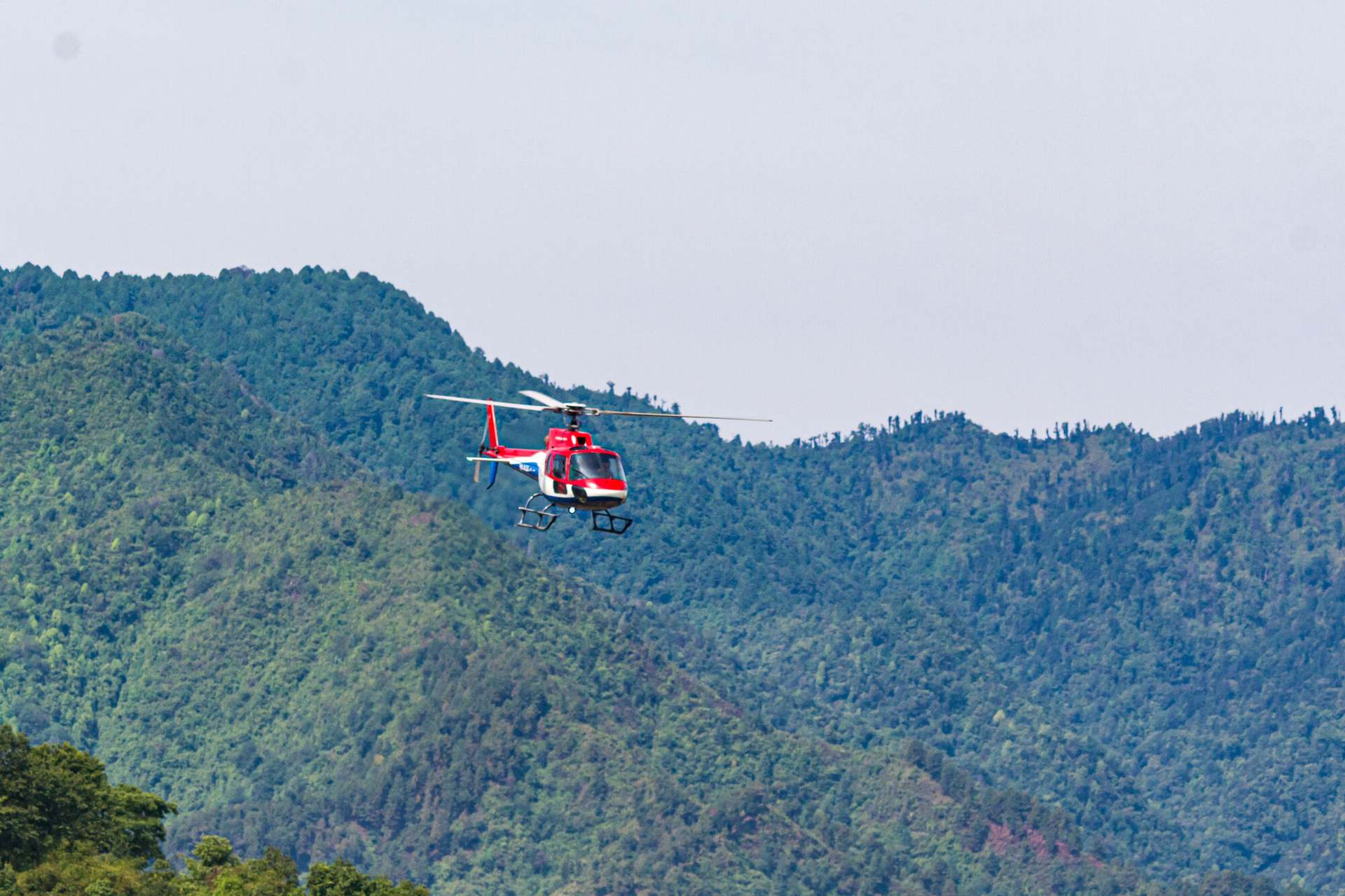
Photograph: © Calistemon / Wikimedia Commons · CC BY-SA 3.0
The ratified record is 12,442 m, set in 1972 and never beaten. Why the ceiling on a spec sheet is not the height a helicopter can hover or land at.
The highest helicopter altitude on record is 12,442 m, or 40,820 feet. Jean Boulet reached it in a lightened Aérospatiale SA 315B Lama on 21 June 1972, and the Fédération Aéronautique Internationale still lists that flight as the absolute helicopter altitude record. Working helicopters fly nowhere near it. In Nepal's Khumbu, the Everest region, a passenger landing tops out at about 5,500 m.
Between those two figures sit three different ceilings, and a specification sheet leads with the one that governs least.
What is a helicopter's service ceiling?
It is the altitude at which the aircraft's best rate of climb has fallen to 100 feet per minute. That is the point where climbing stops being useful, not the point where it stops.
The absolute ceiling sits above it, and it is where the rate of climb reaches zero. Almost nobody quotes that number, because an aircraft with no climb left has no margin left for anything else either.
The 100 ft/min threshold is a convention rather than physics. At that rate an aircraft needs ten minutes to gain 1,000 feet, which is slow enough to be useless and fast enough to measure.
A third figure appears on helicopter data sheets: maximum flight altitude, which is a certified limit rather than a measured performance. Airbus gives the H125 a maximum flight altitude of 7,010 m — 23,000 feet — on its technical information page for the type. Robinson publishes a service ceiling of 14,000 feet for the piston-engine R44. Neither number says anything about where either aircraft can stop.
| Ceiling | How it is defined | What it decides |
|---|---|---|
| Absolute ceiling | Rate of climb reaches zero | Nothing usable — no margin is left at it |
| Service ceiling | Best rate of climb falls to 100 ft/min | How high the aircraft still climbs usefully |
| Hover ceiling, in ground effect | Hover within about one rotor diameter of the surface | A pad it can settle onto with the cushion helping |
| Hover ceiling, out of ground effect | Hover clear of that cushion, on engine power alone | Where it can actually collect you and depart |
Maximum flight altitude, the figure most often quoted for the H125, is a fourth thing again: a certified limit on flight rather than a measurement of climb.
Why does the hover ceiling decide where a helicopter can land?
Because a landing and a departure both pass through a hover, and a hover is the most power-hungry thing a helicopter does.
Close to the ground the rotor's own downwash piles up beneath it and holds the machine on a cushion of its own making. That is ground effect, and it is measured within about one rotor diameter of the surface. Out of ground effect is measured clear of the cushion, conventionally at around one and a half rotor diameters, where nothing but engine power is holding the aircraft up.
The out-of-ground-effect figure is the one to read. Airbus gives the H125 a hover ceiling out of ground effect of 3,840 m at maximum take-off weight, against a maximum flight altitude of 7,010 m for the same aircraft. The hover number is 55 per cent of the flight number.
That ratio is worth carrying as a sanity check on any specification sheet: at full weight, the height a single-engine helicopter can collect you from is a little over half the height it is certified to fly at. Everything between the two is airspace it can cross and cannot stop in.
The hover figure is quoted at maximum take-off weight, which is also the lever that moves it. Take weight out of the aircraft and the hover ceiling rises. That is the entire reason a group bound for a high landing site in Nepal is weighed at check-in and carried up in two shuttles.
What is density altitude, and how do you work it out for the morning you fly?
Density altitude is the altitude the air behaves as though it were, once temperature is accounted for. Every published ceiling is quoted against the International Standard Atmosphere, the ICAO model each performance chart is drawn against, and the air over Nepal is rarely standard.
The rule of thumb taught in flight training is 120 feet of density altitude for every 1 °C the outside air is warmer than the standard temperature for that height. It is stated in that form across pilot training material and it is arithmetic a passenger can do on the way to the airport.
Work it at Kala Patthar, the highest landing site sold to passengers in the Everest region, which stands at 5,545 m. The standard atmosphere puts the temperature there at −21 °C. On a morning at −11 °C the air is 10 °C above standard, so the rule adds 1,200 feet — about 366 m. The rotor performs as though the pad were at 5,911 m rather than 5,545 m.
Three hundred and sixty-six metres is not a rounding error at that height. It is roughly the difference between Everest Base Camp and Kala Patthar, applied to an aircraft that is already near the top of what it can do.
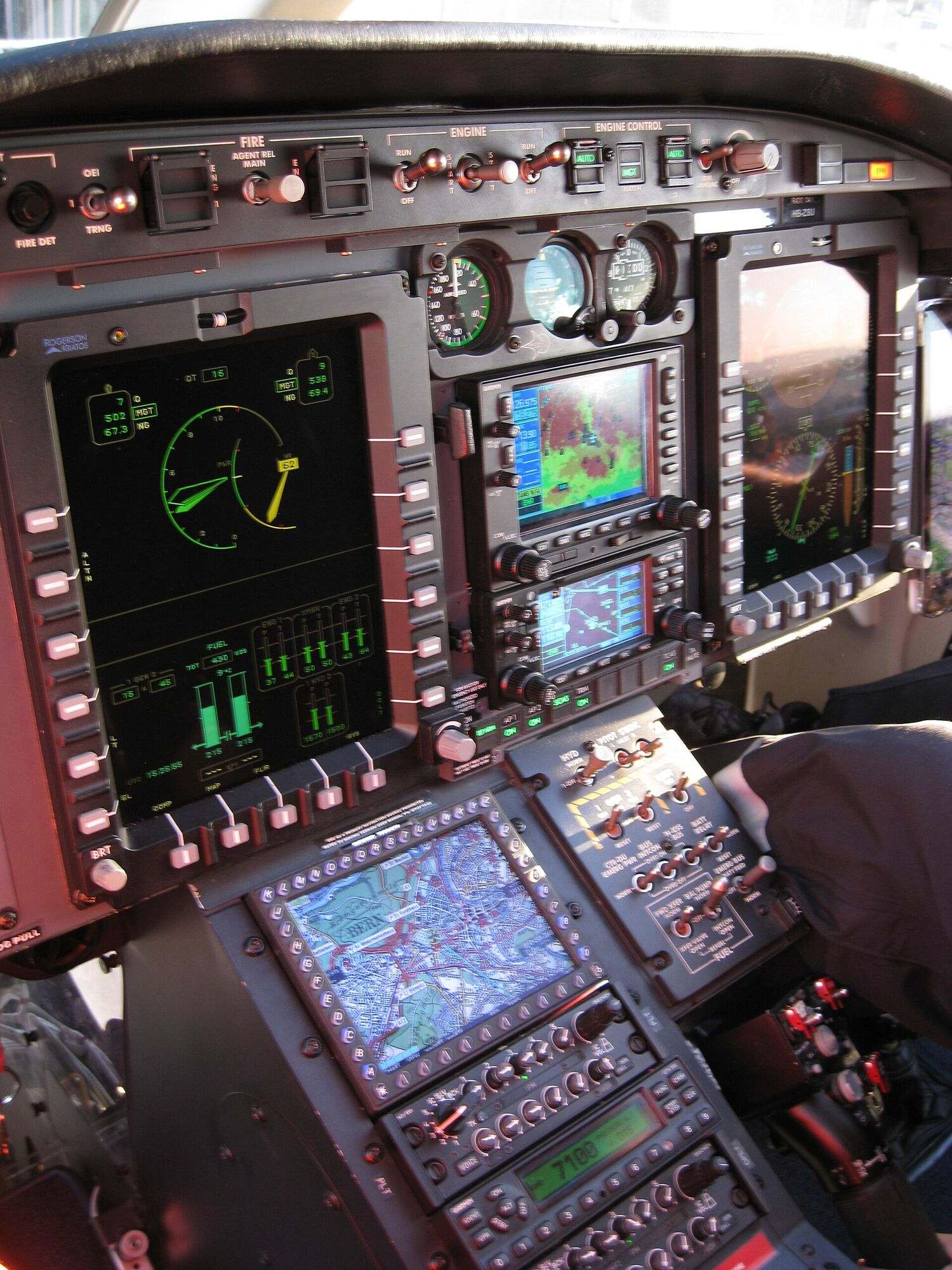
Nothing on the instrument panel announces this, and the aircraft simply climbs worse. It is the whole argument for dawn departures in Nepal, which are a performance decision before they are a weather one: the air is coldest, and so densest, in the hour after first light.
How high can a helicopter fly from Lukla, in Nepal's Khumbu?
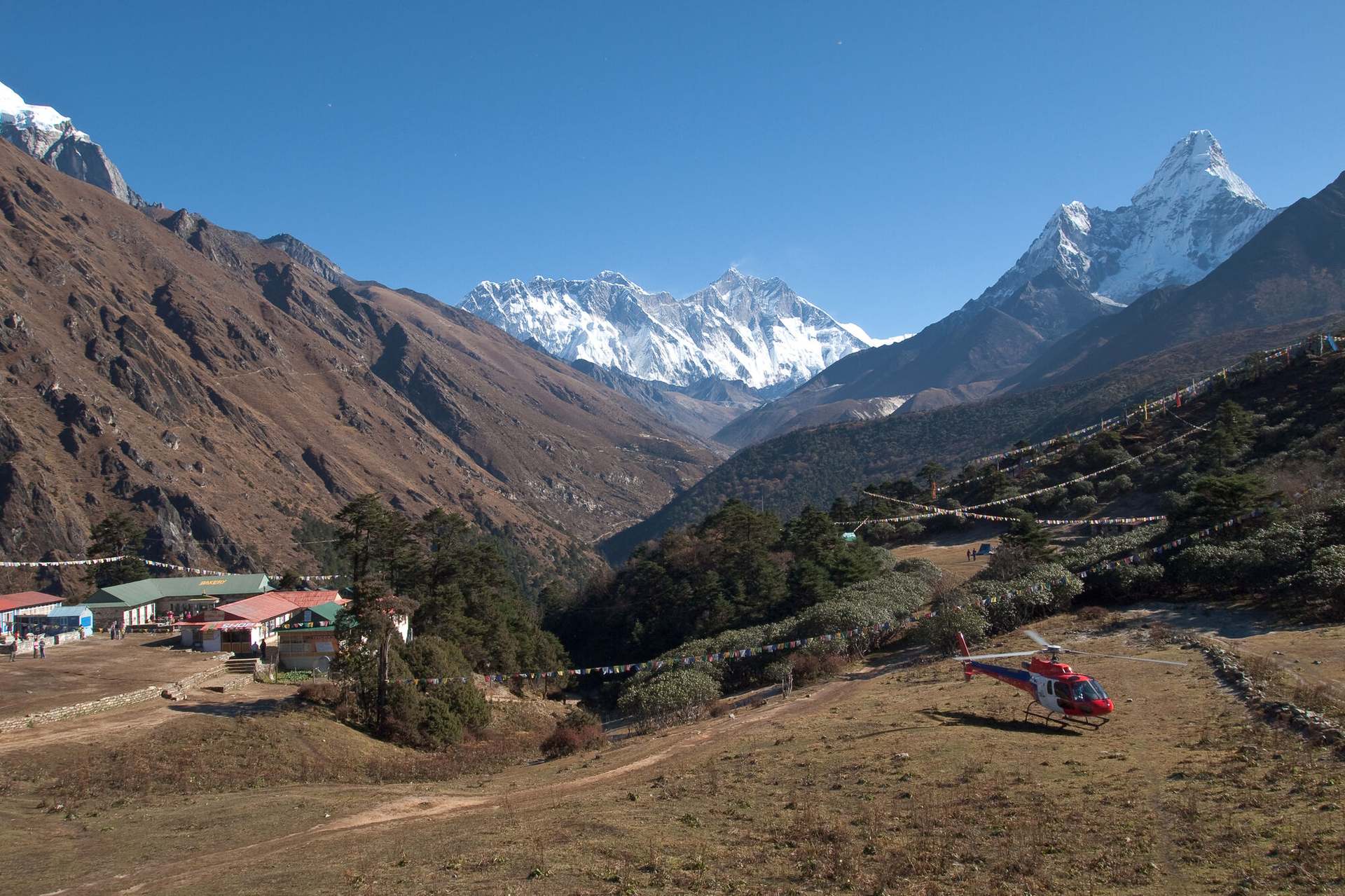
Nepal's Everest flying runs off Tenzing–Hillary Airport at Lukla, at 2,845 m, the nearest aerodrome to the mountain and the refuelling point for most helicopter movements in the region. The day itself starts lower, at Kathmandu's Tribhuvan International, 1,338 m.
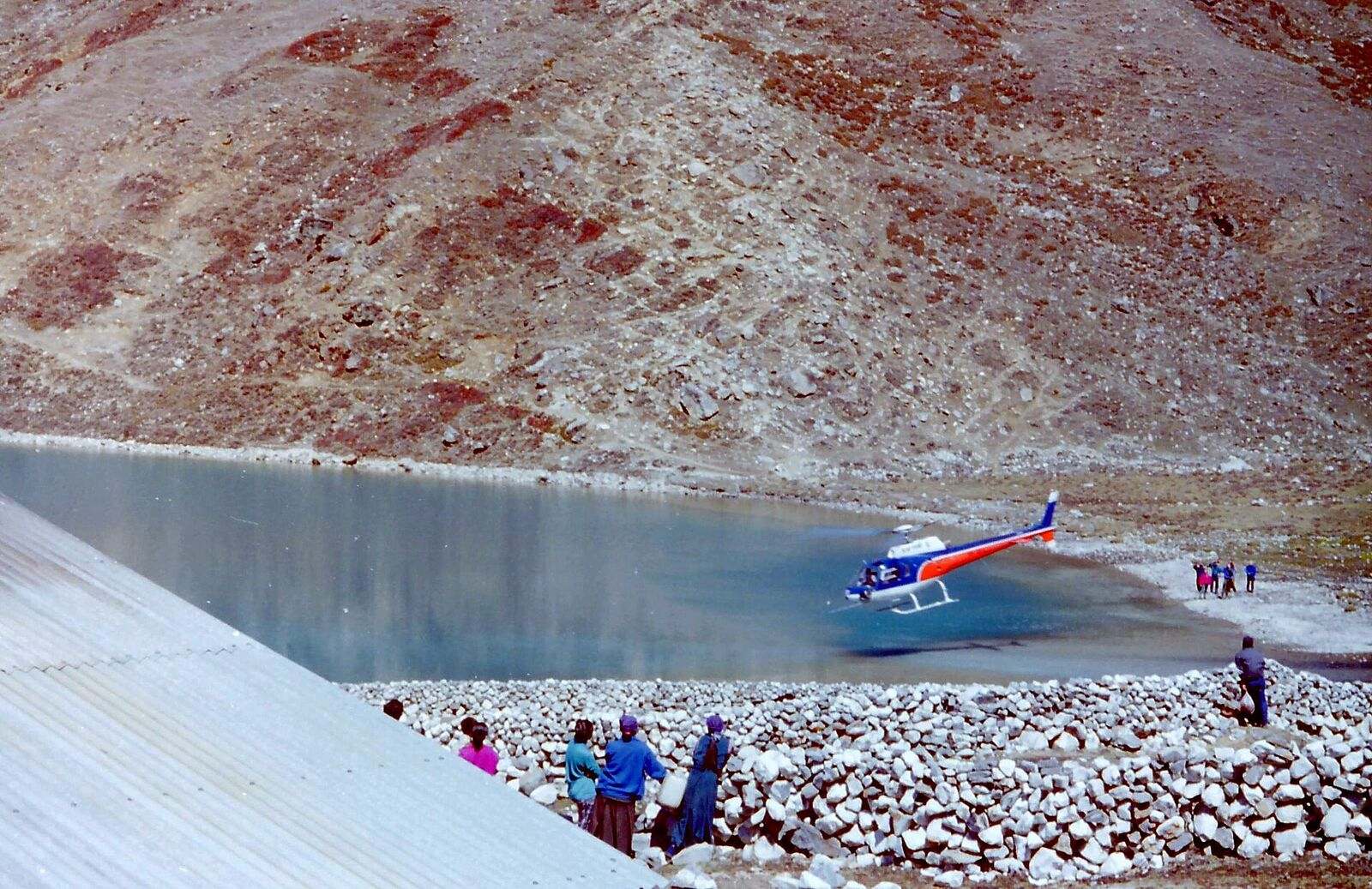
Above Lukla the pattern is a ladder, and a different constraint sets each rung. Passenger landings top out at about 5,500 m, which covers Kala Patthar at 5,545 m and Everest Base Camp at 5,364 m. Rescue landings are made to around 6,400 m, with a light aircraft and a crew who have accepted a thinner margin.
Above that the aircraft does not land. It holds a hover while a longline lifts a casualty from ground the skids will never touch, which is a use of the hover ceiling rather than an exception to it.
The highest of those lifts is documented. Maurizio Folini flew an AS350 B3 to about 7,800 m on Mount Everest on 21 May 2013 to lift an injured climber on a longline, and Vertical Magazine reported it as the highest helicopter rescue made on the mountain.
| Height | Air pressure, share of sea level | What happens there |
|---|---|---|
| Kathmandu, 1,338 m | 85% | The flying day starts and ends here |
| Lukla, 2,845 m | 71% | Refuelling point for the Khumbu |
| H125 hover ceiling OGE, 3,840 m | 62% | Airbus figure, at maximum weight |
| Everest Base Camp, 5,364 m | 51% | Landings in the spring season |
| Kala Patthar, 5,545 m | 50% | Highest landing sold to passengers |
| Rescue landings, about 6,400 m | 44% | Light aircraft, accepted margin |
| H125 maximum flight altitude, 7,010 m | 40% | Certified limit on flight, not landing |
Pressure shares are from the International Standard Atmosphere, the model every performance chart is drawn against, and are not a forecast. The two aircraft figures are Airbus's own, published on its technical information page for the H125.
Why do the ceilings come apart above 6,000 m?
Because at 6,000 m the standard atmosphere holds 47 per cent of the pressure it holds at sea level, and a rotor blade and a turbine engine are both mass-flow machines. Both work on the quantity of air passing through them, so both lose output together as that figure falls.
Two curves are closing at the same time. The power an aircraft has available drops with air density. The power it needs to hover rises, because thinner air has to be pushed harder to shift the same mass of it. Where the curves meet is the hover ceiling, and above it an aircraft can be flying perfectly well with no way to stop.
The assumptions inside each published figure fail in the same band. A service ceiling assumes a rate of climb; above 6,000 m a loaded aircraft may have none. A hover ceiling assumes maximum take-off weight, which is precisely what operators strip away to get higher. Density altitude then moves both, on a scale that changes through the morning.
So a certified limit is not an itinerary. The H125 may be flown to 7,010 m. It cannot be landed there with anybody in the back, and no operator sells that as a product.
Is the highest helicopter flight really 42,500 feet?
That figure is widely repeated and it is not a ratified record. Fred North is credited with taking an AS350 B2 to 12,954 m — 42,500 feet — in 2002, and the flight is not recognised by the Fédération Aéronautique Internationale.
The accounts that repeat it do not agree with each other either. Some place the flight over Marignane in France in August 2002; others put it near Cape Town in South Africa in March of the same year. A record with two dates and two countries is a claim rather than a record.
The FAI's own position is straightforward. It marked the fiftieth anniversary of Boulet's 12,442 m climb in 2022 with the record still standing, and its account notes that the engine flamed out at the top of the climb and that Boulet brought the Lama down in autorotation.
The highest helicopter landing is a different record from the highest helicopter flight, and it was made on the summit of Mount Everest in 2005 by an aircraft stripped of everything but its pilot.
The distinction is the useful part. A record climb is flown by a test pilot in a lightened machine in conditions chosen for the attempt, and it says what an airframe did once. It says nothing about the height a loaded aircraft can hover at, which is the only ceiling a passenger ever meets.
FAQs
How high can a helicopter fly?
The highest altitude a helicopter has reached under a ratified record is 12,442 m, or 40,820 feet, flown by Jean Boulet in an Aérospatiale SA 315B Lama on 21 June 1972. Working helicopters operate far lower. Airbus certifies the H125, the type that does most of Nepal's mountain flying, to a maximum flight altitude of 7,010 m, and gives it a hover ceiling out of ground effect of 3,840 m at maximum take-off weight.
How high can a helicopter fly in metres?
A modern high-altitude single-engine helicopter is certified to around 7,000 m: Airbus gives the H125 a maximum flight altitude of 7,010 m. A piston-engine light helicopter is held to roughly 4,300 m, which is the 14,000-foot service ceiling Robinson publishes for the R44. The absolute record, ratified in 1972 and never beaten since, is 12,442 m.
What is a helicopter's service ceiling?
A helicopter's service ceiling is the altitude at which its best rate of climb has fallen to 100 feet per minute, the convention used across published aircraft performance data. It is not the height at which the aircraft stops climbing — that is the absolute ceiling, and it sits higher. Neither figure describes where the aircraft can hold a hover, which is what a landing needs.
How high can a helicopter fly on Everest?
Helicopters fly over the upper slopes of Mount Everest, but they land with passengers no higher than about 5,500 m — Kala Patthar at 5,545 m and Everest Base Camp at 5,364 m, both in Nepal's Khumbu. Rescue landings are made to around 6,400 m. Higher than that the aircraft does not land at all: it holds a hover while a longline lifts a casualty from ground the skids never touch.
How high can helicopters go up Everest in a rescue?
The highest documented helicopter rescue on Mount Everest was flown at about 7,800 m on 21 May 2013, when Maurizio Folini lifted an injured climber on a longline beneath an AS350 B3; Vertical Magazine reported it as the highest made on the mountain. Rescue landings, as opposed to longline lifts, reach about 6,400 m. Both need a light aircraft, a particular pilot and a window in the weather.
Ready to fly this route?
Compare every licensed operator that flies it, with seat and whole helicopter prices side by side.
See operators and pricesThe full answer, kept up to date: Can a helicopter land on Mount Everest?