What a helicopter can actually do in Nepal's thin air
Go Heli Nepal7 min read
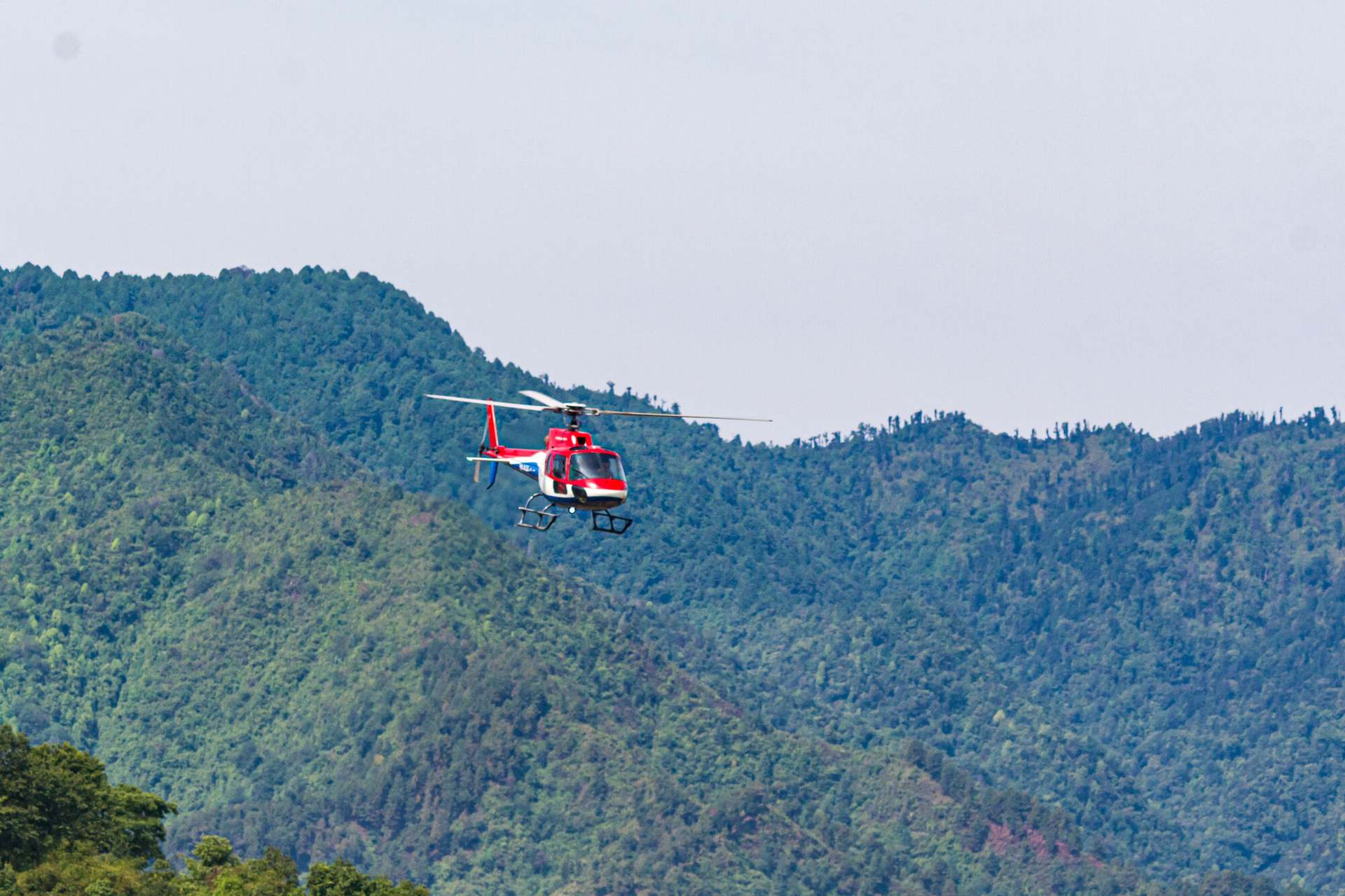
Photograph: © HBZSU / Wikimedia Commons · CC BY-SA 4.0
Airbus certifies the H125 to 7,010 m and to a hover out of ground effect at 3,840 m. Everything about flying in Nepal sits between those two numbers.
Helicopter capability in Nepal is the distance between two figures the manufacturer publishes for the same aircraft. Airbus gives the H125 a maximum flight altitude of 7,010 m on its technical information page for the type, and a hover ceiling out of ground effect of 3,840 m at maximum take-off weight. Everything a Himalayan operator does sits between those numbers.
This page defines the subject rather than branching into it. What a flight costs and how one is booked belong to the charter pages and are not covered here.
What can a helicopter physically do in Himalayan air?
It can reach almost anywhere in Nepal. It can land at very few of the places it can reach.
The two certified numbers describe different things and are read differently. Maximum flight altitude is a limit on forward flight, where the rotor is being fed air by the aircraft's own speed. Hover ceiling out of ground effect is a limit on standing still in the air, with nothing but engine power holding the machine up, and that is the condition a landing approach and a departure both pass through.
The hover figure is also quoted at maximum take-off weight, which is why it moves so much in practice. Take weight out of the aircraft and it climbs. That is the lever a mountain pilot actually pulls, and it is the reason the same airframe behaves like two different machines on the same morning.
| Figure | Airbus number | What it decides |
|---|---|---|
| Maximum flight altitude | 7,010 m (23,000 ft) | How high the aircraft may be flown, in forward flight |
| Hover out of ground effect | 3,840 m (12,600 ft) at max take-off weight | Where it can hold a hover, so where it can land and depart |
Both figures are Airbus's own, published on its technical information page for the type. Neither is a promise about a particular flight on a particular morning.
Why the certified figure is not what the aircraft does loaded
A rotor blade and a turbine engine are both mass-flow machines. They work on the quantity of air passing through them, and at altitude there is less of it.
The International Standard Atmosphere, the model every aviation performance chart in the world is drawn against, puts air at Kala Patthar's 5,545 m at about half the pressure of air at sea level. Lukla, at 2,845 m, is at roughly 71 per cent. Kathmandu's Tribhuvan International, at 1,338 m, is already down to about 85 per cent before the flight has begun.
Temperature moves the same figure again, in the same direction. Warm air is thinner than the standard model assumes, so an aircraft on a warm afternoon performs as though it were higher than it is — the effect pilots call density altitude. Nothing on the instrument panel warns about it and the aircraft simply climbs worse.
That is the whole argument for dawn departures in Nepal, and it is a performance argument before it is a weather one. The air is coldest and densest in the hour after first light, and the valley cloud that closes the Khumbu by early afternoon has not yet built.
Which aircraft fly the high work in Nepal?
Three types account for nearly all of it, and the choice between them is a lifting decision. What the numbers on their specification sheets mean in practice — how helicopters perform in nepal — is the cluster below this one.
The single-engine Airbus AS350 B3e and the H125 that succeeded it do the great majority of Nepal's mountain flying. Both carry five at low elevation. Above about 5,000 m the same cabin will take two or three, so a full group is carried up from an intermediate point in two shuttles — the flight is not shorter, it is flown twice.
The twin-engine Bell 412EP is the heavy machine. It seats nine, carries loads underneath on a hook, and does the rescues and the cargo work a smaller aircraft cannot. It also has a lower ceiling than the singles, which is the trade a bigger cabin costs.
| Type | Seats | Ceiling | What it is for |
|---|---|---|---|
| Airbus AS350 B3e | 5 | 23,000 ft | The type most often seen; mountain tours and transfers |
| Airbus H125 | 5 | 23,000 ft | Carries more weight high up; usual choice for Everest work |
| Bell 412EP | 9 | 20,000 ft | Twin engine; large groups, slung cargo, heavy rescue |
Where a helicopter actually lands, from Kathmandu to the Khumbu
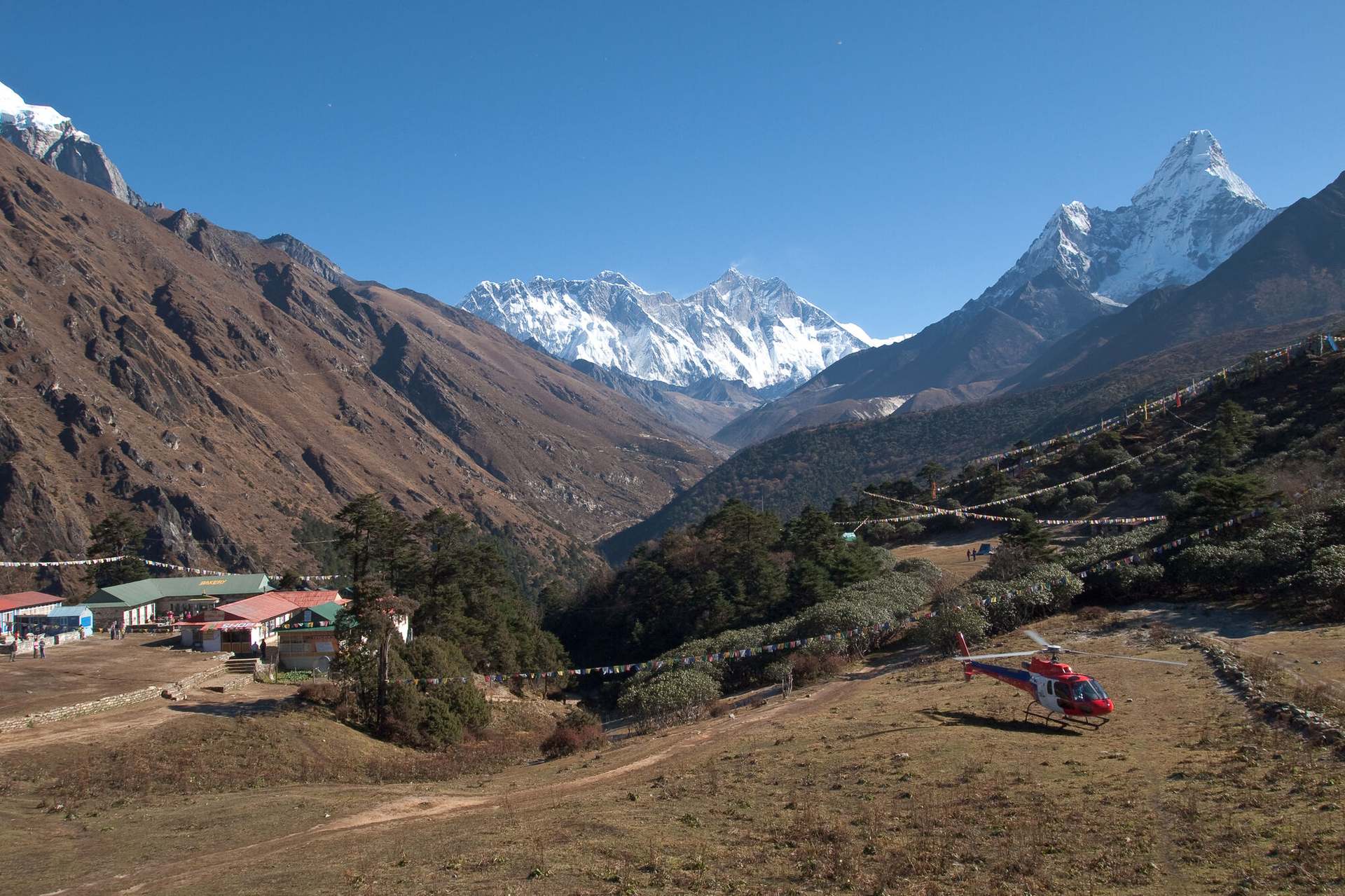
Nepal's flying day starts at Tribhuvan International in Kathmandu, at 1,338 m, and the Khumbu work runs off Tenzing–Hillary Airport at Lukla, at 2,845 m, which is the nearest aerodrome to Everest and the refuelling point for most of the region's helicopter movements.
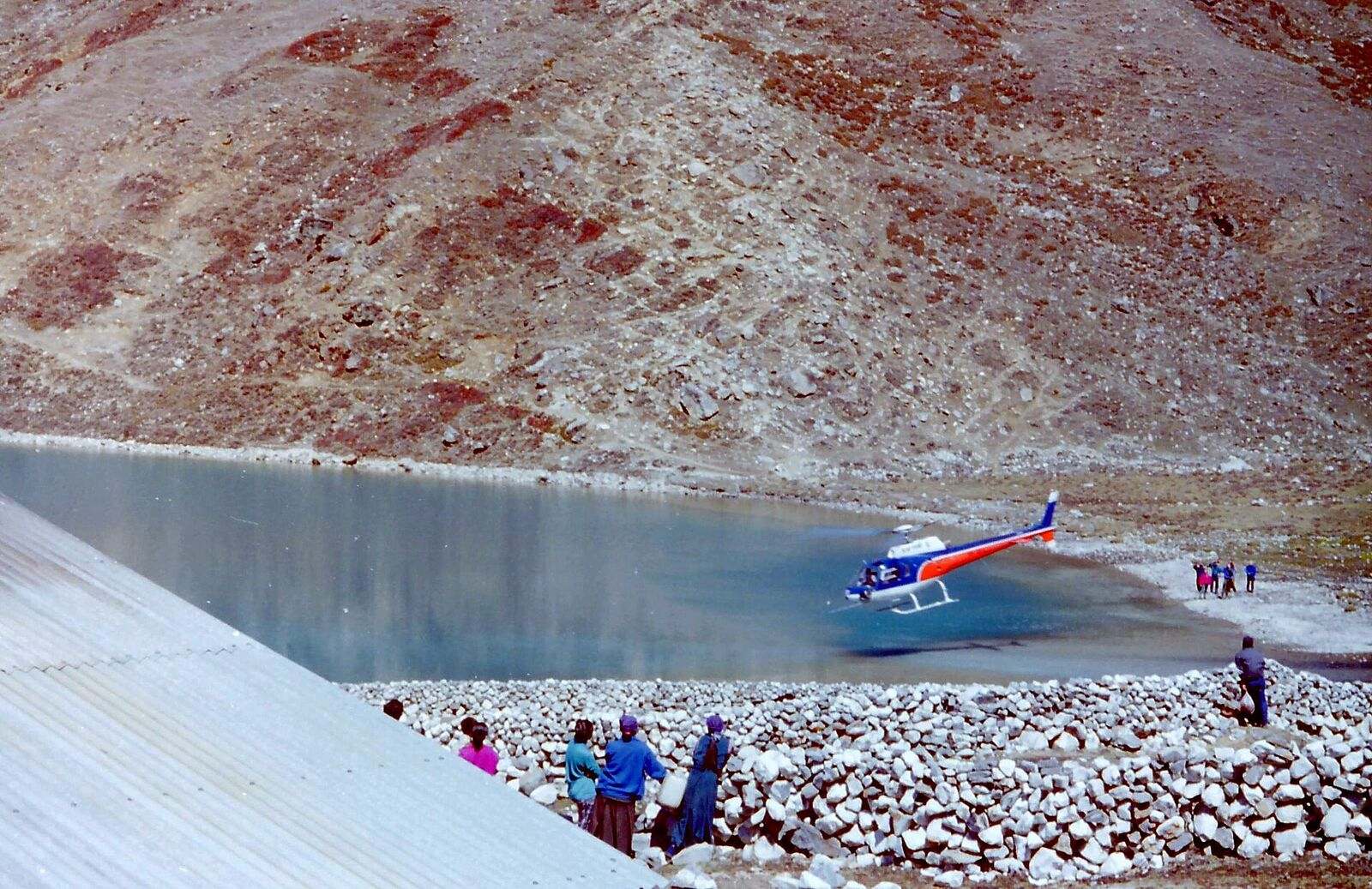
Above Lukla the pattern is a ladder rather than a ceiling. Passenger landings in the Everest region top out at around 5,500 m, which covers Kala Patthar at 5,545 m and Everest Base Camp at 5,364 m. Rescue landings are made higher, to around 6,400 m, with a light aircraft and a crew who have decided the risk is worth taking. Above that a helicopter does not land at all: it works on a longline, hovering while a rescuer and a casualty are lifted from ground the skids will never touch.
One aircraft has landed higher than any of that, once, in 2005. That is a story with its own page and it is not the working envelope described here.
How a pilot gets performance back
There are only a few levers and all of them cost something.
Fuel is the first. A machine tankered full is a machine that cannot hover where it needs to, so high sectors are flown on the least fuel that leaves a legal reserve, which means more refuelling stops.
Weight is the second, and it is why every passenger on a Nepali charter is weighed at check-in rather than asked. Time of day is the third. Aircraft type is the fourth, and it is settled before anybody arrives at the airport.
What none of these levers can do is make a marginal day into a good one. Weather closes Lukla for days at a time in the monsoon, and no operator can promise a departure slot. A pilot who declines a landing site has usually run the same arithmetic as everybody else and reached a different answer about the margin.
FAQs
What is the difference between a helicopter's maximum altitude and its hover ceiling?
Maximum flight altitude is how high the aircraft may be flown; hover ceiling is how high it can hold a stationary hover, which is what a landing and a departure both need. Airbus certifies the H125 to a maximum flight altitude of 7,010 m and to a hover out of ground effect of 3,840 m at maximum take-off weight. The second number is the one that decides where a helicopter can pick you up.
What is density altitude, and why does it matter to a helicopter in Nepal?
Density altitude is the altitude the air behaves as though it were, once temperature and pressure are accounted for. A helicopter at 4,000 m on a warm afternoon performs as if it were considerably higher, because warm air is thinner than the International Standard Atmosphere assumes. In Nepal that is why Himalayan departures are flown at first light, when the air is at its coldest and densest of the day.
Which helicopter types do the high-altitude flying in Nepal?
Almost all high-altitude work in Nepal is flown on the single-engine Airbus AS350 B3e and its successor the H125, which carry five at low elevation and two or three above about 5,000 m. The twin-engine Bell 412EP carries nine and is used for larger groups, underslung cargo and rescues a smaller aircraft cannot do. The choice is a lifting decision rather than a comfort one.
Does a manufacturer's altitude figure mean a helicopter can land there?
No. A certified maximum flight altitude describes an aircraft in forward flight, usually light, and says nothing about landing at that height with passengers aboard. Helicopters in Nepal routinely fly above 6,000 m and routinely land with passengers no higher than about 5,500 m. Treat a specification sheet as the outer limit of the machine, not as an itinerary.
How much thinner is the air at a Himalayan landing site?
Under the International Standard Atmosphere, air at Kala Patthar's 5,545 m holds about half the pressure of air at sea level, and air at Lukla's 2,845 m about 71 per cent of it. Kathmandu, at 1,338 m, is already down to roughly 85 per cent. Rotor blades and turbine engines both work on the mass of air they are given, so both lose output together as that figure falls.
Ready to fly this route?
Compare every licensed operator that flies it, with seat and whole helicopter prices side by side.
See operators and pricesThe full answer, kept up to date: Can a helicopter land on Mount Everest?