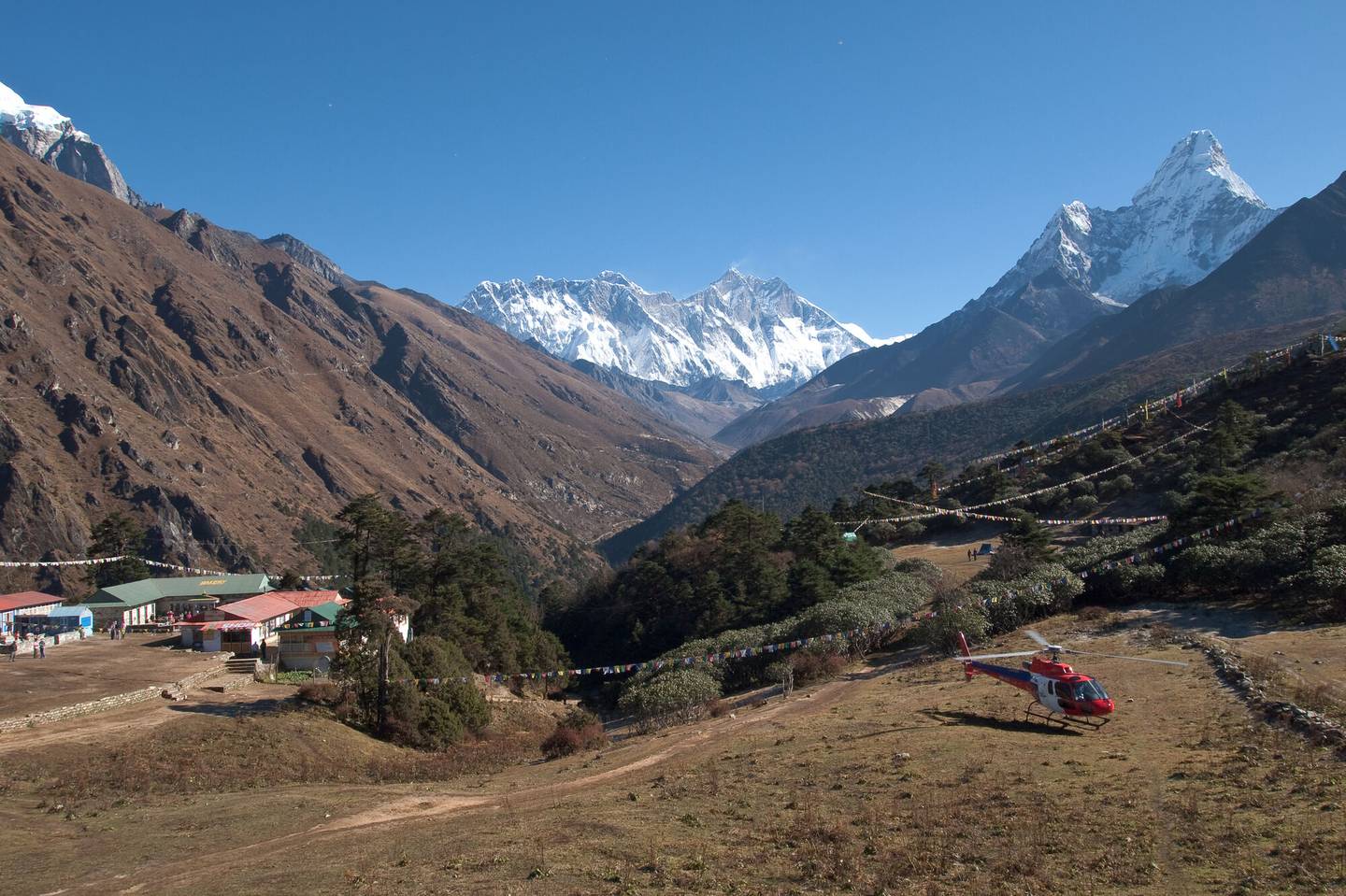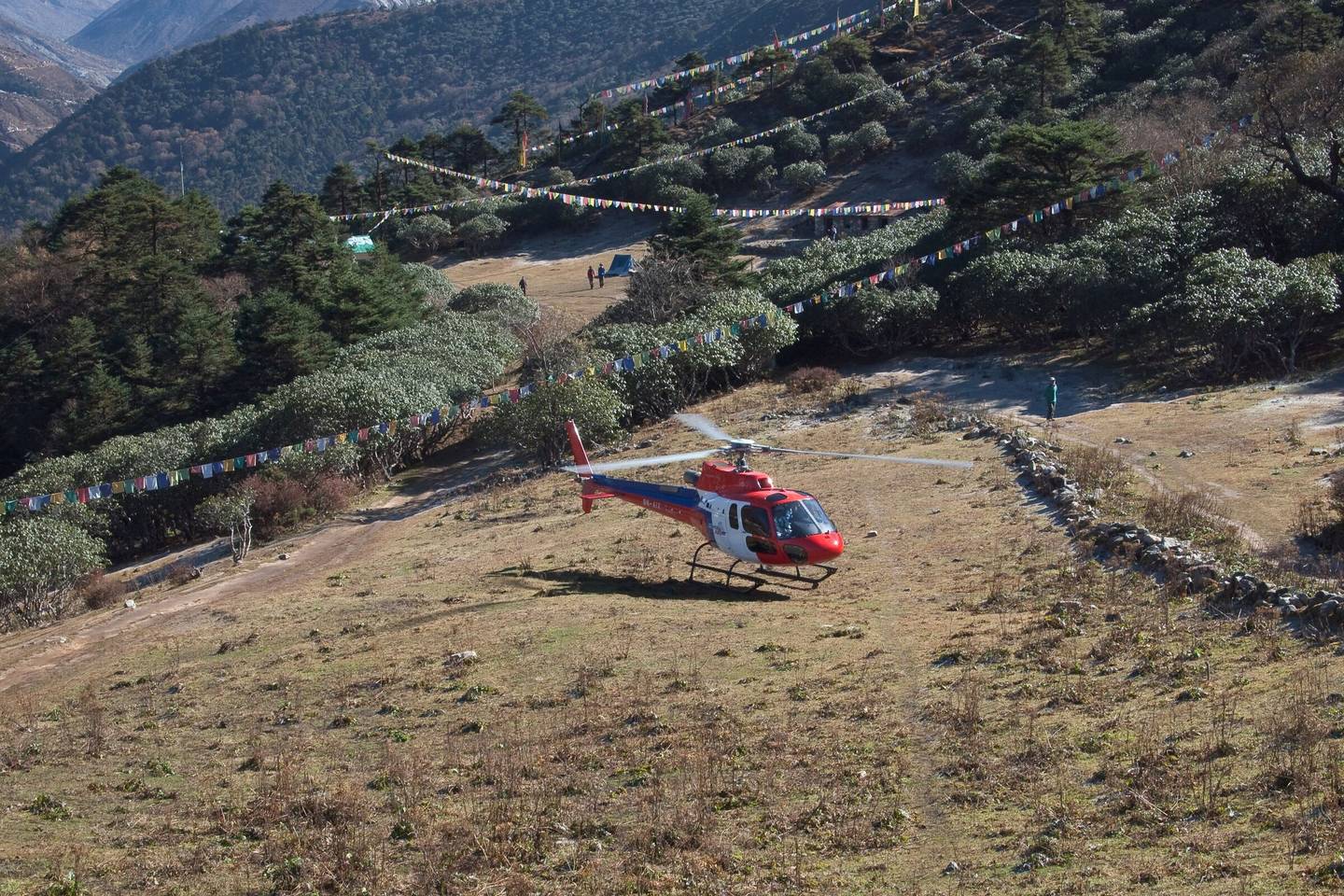

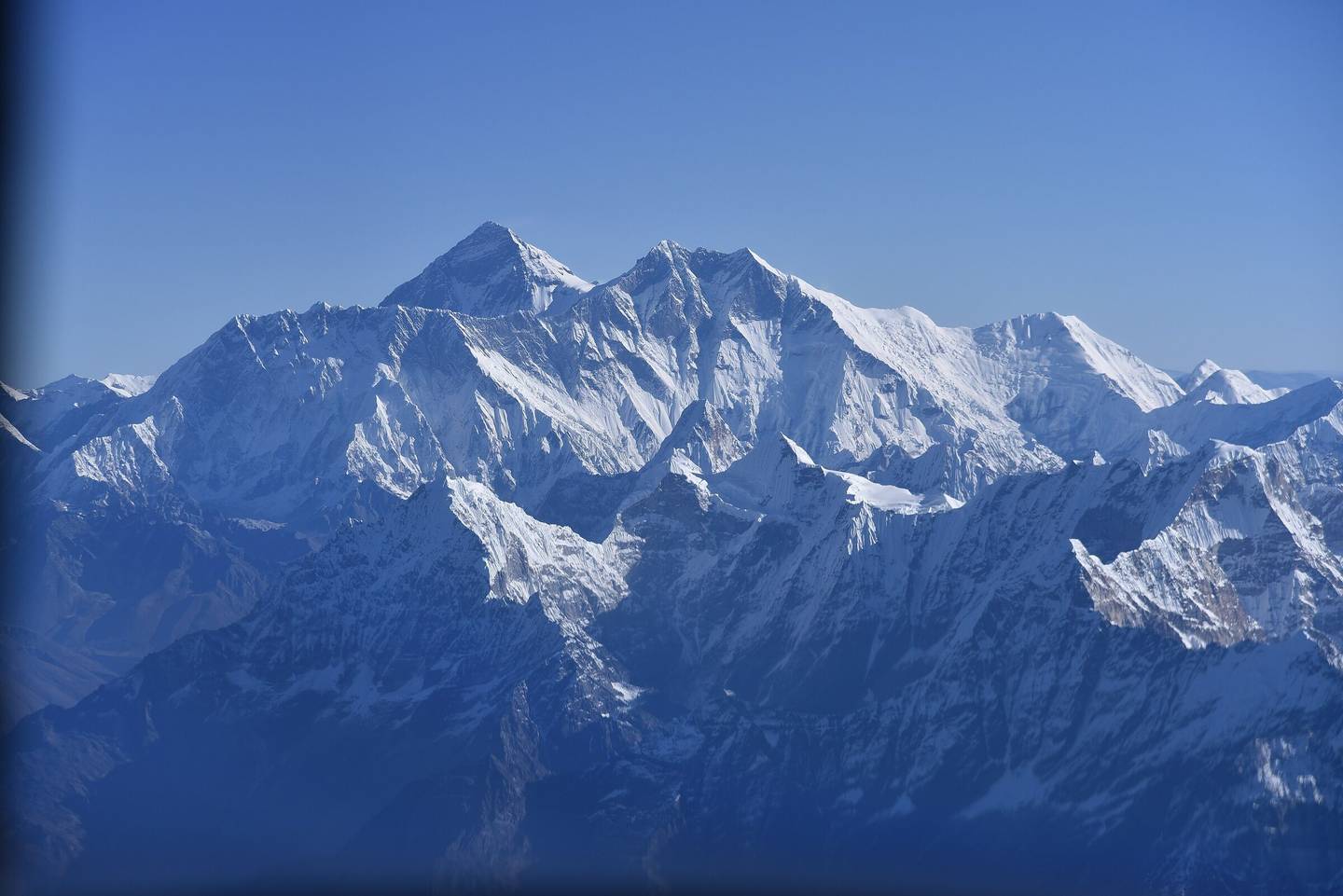
A helicopter has flown to the top of Mount Everest exactly once, and you cannot buy a seat on it. Didier Delsalle landed a stripped production AS350 B3 on the 8,848 m summit on 14 May 2005 and took off again. The Fédération Aéronautique Internationale ratified the flight. Nobody has repeated it in the two decades since. That morning began at Tenzing–Hillary Airport at Lukla, in Nepal's Khumbu, and Nepal's Everest helicopter flying still works out of Lukla today — landing a long way below the top.
The question arrives in about a dozen phrasings and they are not all asking the same thing. Reaching the Everest region, setting down near the mountain, setting down at Everest Base Camp and setting down on the summit have four different answers, and only the last of them is really about how high a helicopter can get.
Can a helicopter fly over Everest?
Flying over the summit and landing on it are different problems, and flying over is the easier one.
A climb is flown with airspeed, and airspeed hands the rotor air it does not have to generate for itself. A hover generates all of its own. So the height a helicopter can reach in forward flight is always the larger number, and the highest helicopter altitude ever flown sits well above anything a helicopter could have landed on.
What nobody sells is a passenger flight over the top. The flights that exist in Nepal go to viewpoints below the mountain, and the reason is the next section.
Why can't a helicopter land on the summit of Everest?
Because of what the air at 8,848 m will hold up, and because of where the aircraft has to stop.
There is about a third as much air per cubic metre at the summit as at sea level, so the rotor makes roughly a third of the lift. The engine breathes the same thin air, so it has less power to turn that rotor with. Those two losses arrive together rather than one at a time.
Airbus gives the H125 — the type it sells today in place of the AS350 B3 — a maximum flight altitude of 7,010 m on its technical information page. The summit is 1,838 m above that. The figure that governs a flight with people in it is lower again: Airbus gives the same aircraft a hover ceiling out of ground effect of 3,840 m at maximum take-off weight.
That last number is the one worth sitting with. At 3,840 m it is below Kala Patthar, the 5,545 m viewpoint where the Everest flight actually lands. An aircraft at its maximum take-off weight could not hold a free hover there at all, and the landing happens because the aircraft arrives light and because a rotor close to the ground gets help it does not get in open air. The fuller version of that arithmetic is in how helicopters perform in nepal, and the frame around it — what a certified figure promises and what it does not — is the helicopter capability performance and aircraft in nepal hub.
| What is being asked | The answer | Where it happens |
|---|---|---|
| Reach the Everest region | Routine in season | Lukla, 2,845 m |
| Set down near Everest | Routine, weather allowing | Kala Patthar, 5,545 m |
| Set down at Everest Base Camp | Not done at all | Overflown, 5,364 m |
| Set down on the summit | Once, stripped and solo | 8,848 m |
Elevations as this site publishes them. The summit figure is the one the 2005 record is written against; Nepal and China agreed a revised 8,848.86 m in December 2020.
What had to come out of the aircraft in 2005?
Everything that could be taken out of it.
The airframe was a production B3 with no passenger seats, no cargo and the minimum fuel that would get it up and back down, flown by one pilot. Several pages describing the flight call the aircraft specially modified. What was done to it was subtraction rather than design — and that is the more interesting claim, because it means the type was already capable and only the weight was in the way.
The margin Delsalle flew in was measured in kilograms. The record files, the ratifying bodies and the figures behind the flight are set out on the page for didier delsalle helicopter everest.
Which helicopters in Nepal get closest to Everest?
The same type, twenty years on.
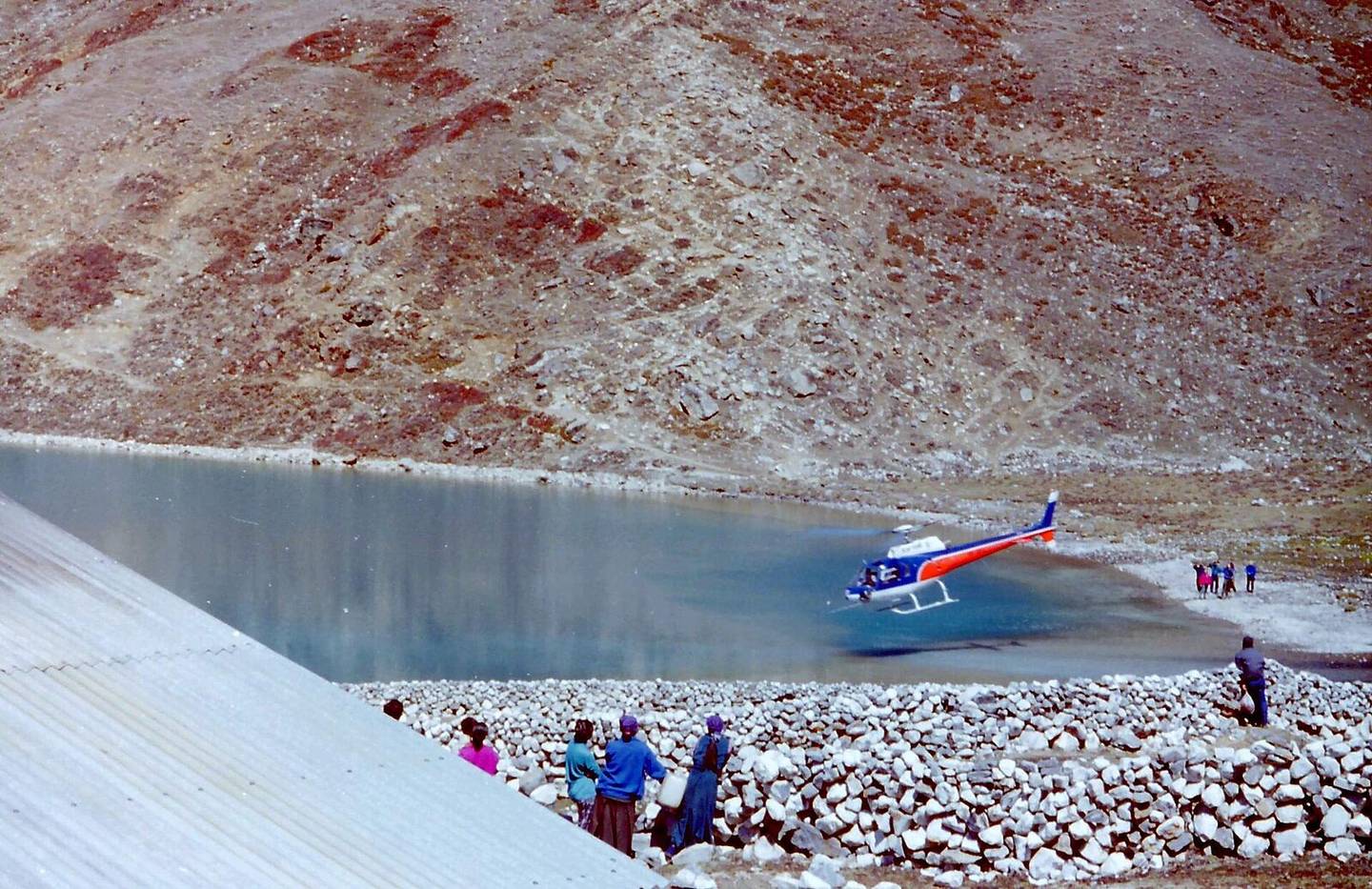
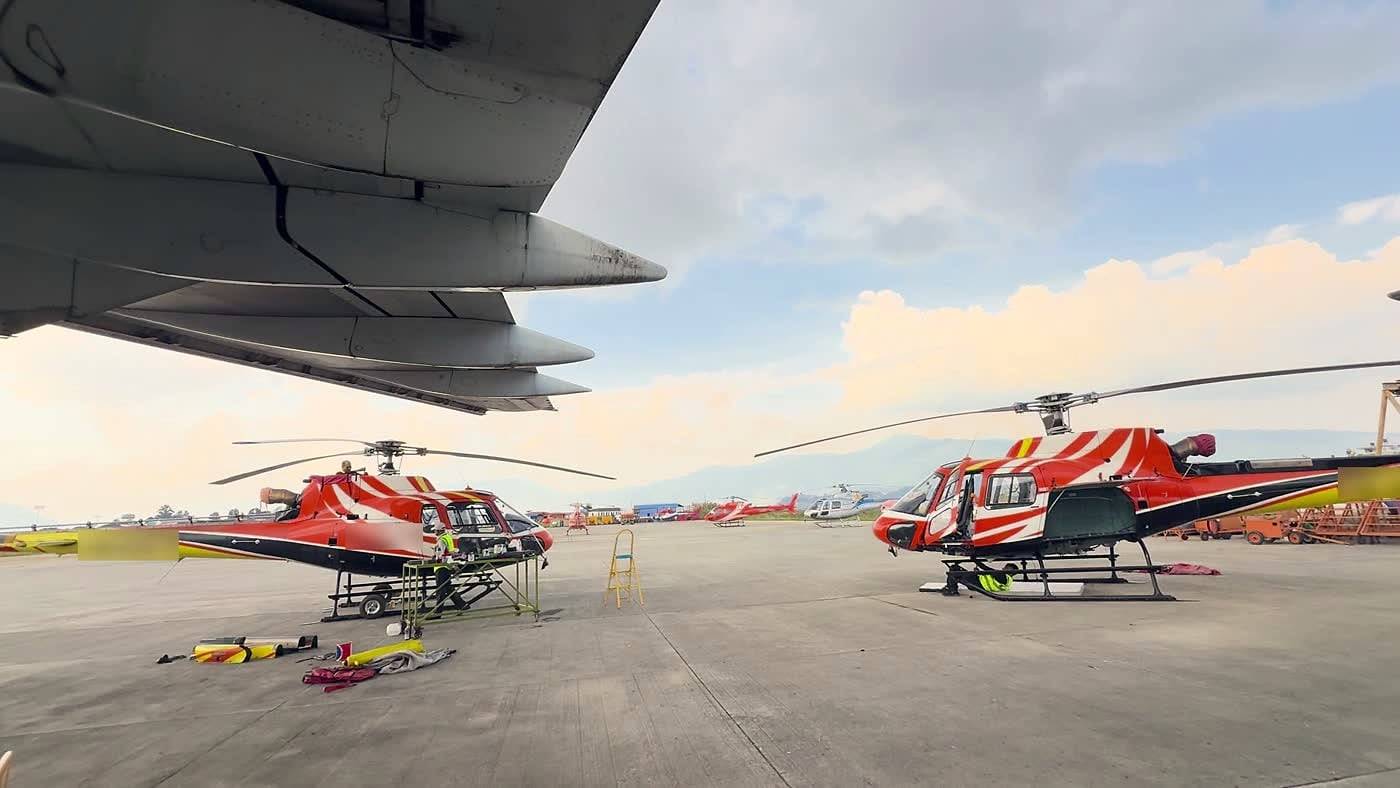
The AS350 B3 is sold today as the H125, and it is the aircraft most operators listed on Go Heli Nepal fly in the Khumbu. A twin-engine machine carries more and does the heavier work, and it does not get as high. The trade is power against weight, and above 5,000 m power against weight is most of what matters.
Which machines sit on Nepali registers, and what each is used for, is covered in helicopters used in nepal.
Where does an Everest helicopter flight in Nepal actually land?
Kala Patthar, at 5,545 m, and Hotel Everest View.
No helicopter lands at Everest Base Camp. Not tourists, not trekkers flying out, not in the expedition months. A good many pages still offer it, and the place itself sits on the Khumbu Glacier at 5,364 m, which is lower than the viewpoint the aircraft uses anyway. The flights overfly it.
The flight that does exist is the everest base camp helicopter tour, which crosses Base Camp and sets down at Kala Patthar. What it costs and how it is booked belong to that page rather than to this one.
Time on the ground up there is short by design, and a departure slot is never a promise: the Khumbu gives flyable air from first light until the valleys fill with cloud, and no operator can sell a morning the weather has not agreed to.
Questions this article answers
Can a helicopter fly over Everest?
Flying over the summit of Everest has been done, by an AS350 B3 flown by Didier Delsalle in May 2005. Overflight is an easier problem than landing, because a climbing helicopter has airspeed and airspeed hands the rotor air it does not have to generate for itself. The commercial flights sold in Nepal go to viewpoints below the mountain rather than over the top of it.
Can helicopters fly to Mount Everest?
Helicopters fly into the Everest region of Nepal through the trekking season, working out of Tenzing–Hillary Airport at Lukla at 2,845 m. Flying to the mountain and flying to its summit are different questions with different answers. The commercial answer stops at about 5,500 m, which is roughly 3,300 m below the top.
Can a helicopter reach Mount Everest?
Reaching Mount Everest by helicopter is routine for the region around it and exceptional for the summit. Aircraft working out of Lukla in Nepal's Khumbu reach the viewpoints below the mountain through the season. The summit itself has been reached once, on 14 May 2005, by a stripped AS350 B3 carrying one pilot and the minimum fuel that would return it.
Can you take a helicopter to the top of Everest?
Taking a helicopter to the top of Everest is not something any operator sells. The one aircraft that got there carried no passengers, no cargo and the minimum fuel, because what is left over for payload at 8,848 m is measured in kilograms rather than in seats. There is no version of that flight with a passenger aboard.
Can a helicopter land on Everest?
Landing on Mount Everest has happened once, when Didier Delsalle set an AS350 B3 down on the 8,848 m summit on 14 May 2005 and took off again. The Fédération Aéronautique Internationale ratified the flight as a highest take-off rather than a highest landing. The highest place a passenger flight in Nepal lands is Kala Patthar, at 5,545 m.
Why can't helicopters fly to the top of Mount Everest?
At the summit of Everest there is about a third as much air per cubic metre as at sea level, so a rotor there makes roughly a third of the lift it makes on the ground. The engine breathes the same thin air and has correspondingly less power to turn the rotor with. Airbus gives the H125 a maximum flight altitude of 7,010 m on its technical information page for the type, which is 1,838 m below the summit.
Can you take a helicopter to Mount Everest?
A helicopter flight to Mount Everest is a real product in Nepal, and what it delivers is the mountain seen from a viewpoint rather than the mountain itself. The usual shape is a departure from Kathmandu, a fuel stop at Lukla, a landing at Kala Patthar at 5,545 m and a stop at Hotel Everest View. No part of it touches the summit.
Can a helicopter fly to the summit of Mount Everest?
One helicopter has flown to the summit of Mount Everest, a production Eurocopter AS350 B3 stripped for the attempt in May 2005. Airbus gives the same type, sold today as the H125, a hover ceiling out of ground effect of 3,840 m at maximum take-off weight. The distance between that figure and the 8,848 m summit is almost entirely weight rather than altitude.
Can helicopters reach the top of Mount Everest?
Reaching the top of Mount Everest has been done once by a helicopter and never repeated, which makes it a record rather than a capability. The weather is as much of the reason as the thin air: from October to May the jet stream sits on the summit ridge at over 160 km/h. A pilot needs a window that most days of the year do not offer.
Can we go to Mount Everest by helicopter?
Going to Mount Everest by helicopter means flying into the Khumbu in north-eastern Nepal and landing at a viewpoint below the mountain. Kala Patthar at 5,545 m is where the Everest helicopter tour sets down, and Hotel Everest View is the other stop. The trip runs from Kathmandu and back inside a morning when the weather allows it.
Why can't helicopters fly to Mount Everest?
Helicopters do fly to Mount Everest, so the premise is the part of this question worth correcting. The Everest region of Nepal is flown commercially out of Lukla through the trekking season. What a helicopter cannot do is stop on the summit with anybody aboard, and the limit is where an aircraft can come to a hover rather than how high it can climb.